
Mountain Man Plumbing / The replacement guide
Water heater
installation.
A new heater should fit your mornings as well as your mechanical room. Start with what you need, see what each type asks of the house, and know what belongs in the estimate.
Not sure it needs replacing? Work through repair or replace first.
Long story short
We replace and install water heaters, including tank and tankless systems. We handle the plumbing connections and work through the installation requirements with you. Use our instant quote tool to get started, or talk with us about which heater fits your home.
Jump to: What are you considering · A better visit starts here · Follow the water. Understand the heat · Compare the work. Then the number
Skip the read? Get an instant installation quote or text (385) 766-8935.
What are you
considering?
Choose a type to see how it works and what to check. You can switch between them without losing your preparation checklist.
Make the vocabulary make sense
- First-hour rating (FHR)
- The rated gallons a storage heater can supply in an hour that starts with the tank fully hot. It includes stored water and reheating.
Read the reference: ENERGY STAR
- Temperature rise
- How many degrees the heater adds. Water entering at 40°F and leaving at 120°F needs an 80°F rise.
Read the reference: U.S. Department of Energy
- Gallons per minute (GPM)
- Water flow each minute. A tankless rating only helps when you also know the temperature rise used for that rating.
Read the reference: ENERGY STAR
- Recirculation
- A pump and return path move hot water closer to the taps to reduce waiting. The heater, piping and controls must work together.
Read the reference: U.S. Department of Energy
- Commissioning
- The startup checks and records that show how the installed equipment is operating before handoff.
Read the reference: Navien
A better visit
starts here.
Check off the details you have gathered. Bring the list and photos when you discuss the installation.
Planning note 01
Hot water you actually use
List the showers, baths and appliances you want to run together. That gives the capacity discussion a real target.
Have ready: Your busiest hot-water period, overlapping uses and what the current heater fails to do.
What the technician needs to establish
Match the household routine to the rating. Use first-hour delivery for a storage tank and gallons per minute at the required temperature rise for tankless.
Read the reference: ENERGY STAR · U.S. Department of Energy
Planning note 02
The room and the way in
A heater needs room to fit, connect and be maintained. Delivery access and future removal matter too.
Have ready: A full-room photo, door/access measurements and clear photos of the existing connections. Keep covers in place.
What the technician needs to establish
Compare the model's installation and service clearances with the actual room, including access to controls and replaceable parts.
Read the reference: ENERGY STAR · Navien
Planning note 03
Enough gas while things are running
Check the gas supply capacity against the new appliance’s input and the equipment sharing its route.
Have ready: The other gas appliances in the home and any planned additions.
What the technician needs to establish
Assess the shared supply and measure pressure entering the heater while it is running. Compare that result with the model's inlet-pressure requirements.
Read the reference: Navien
Planning note 04
Air in. Exhaust outside.
Gas appliances need air for burning fuel and an approved route for exhaust. Two gas heaters may use different vent systems.
Have ready: Photos of visible venting and the place it ends outdoors, if safely visible from the ground.
What the technician needs to establish
Match materials, routing, termination and combustion-air requirements to the exact appliance manual and local requirements.
Read the reference: A. O. Smith · Navien
Planning note 05
Power the model can actually use
An electric heater needs circuits of the correct voltage and capacity. The electrician also checks how its demand fits alongside the other loads in the home.
Have ready: Heater model details and a photo of the closed electrical panel's labels. Do not remove the panel cover.
What the technician needs to establish
Include the circuits, wiring and any panel or service upgrade needed to supply the selected heater.
Read the reference: U.S. Department of Energy · ENERGY STAR
Planning note 06
Room air for a heat pump
The fan and compressor exchange heat with the room, so air supply, temperature and nearby living spaces affect the choice.
Have ready: Room dimensions, whether the door stays closed and any bedroom or quiet space nearby.
What the technician needs to establish
Check the manufacturer's allowed air arrangement and operating temperatures; plan for sound and cooler discharge air.
Read the reference: ENERGY STAR
Planning note 07
A route for collected water
Heat-pump tanks collect moisture from room air. Condensing gas heaters produce acidic water from cooled exhaust. These are different drain-planning needs.
Have ready: The location of nearby drains and any history of freezing or drain backups.
What the technician needs to establish
Check the exact equipment's drainage requirements, including any pump or condensate treatment needed for the installation.
Read the reference: ENERGY STAR · Navien
Planning note 08
The boiler and tank working together
The indirect tank depends on the boiler, its water circulation and controls for heat.
Have ready: Both model labels and any history of the rooms cooling off during a hot-water call.
What the technician needs to establish
Compare the tank's ratings at the specified boiler conditions. Confirm whether hot water gets priority—temporarily taking heat ahead of the rooms—and how the controls manage that.
Read the reference: Amtrol
Planning note 09
Water pressure and protection
Heating makes water expand. When a check valve prevents that extra water from moving back toward the supply, an expansion tank gives it room. The heater’s safety relief valve opens at its rated pressure or, on a temperature-and-pressure valve, either rated limit.
Have ready: Photos of the existing small expansion tank, shutoff, drain pan and visible relief pipe, where present.
What the technician needs to establish
Check pressure, required expansion control, leak protection and relief discharge. Never cap a relief outlet to stop a drip.
Read the reference: A. O. Smith
Planning note 10
A finished job you understand
Know what was installed, how to use it, and what maintenance comes next.
Have ready: Your questions about settings, warranty, service access and who to call if something changes.
What the technician needs to establish
At handoff, record the startup readings and show the homeowner the controls, shutoffs and maintenance schedule. Leave the model, serial number and warranty documents together.
Read the reference: A. O. Smith · Navien
Inside a condensing gas tankless
Follow the water.
Understand the heat.
A hot tap starts a sequence: detect water, establish air movement, light the burner, then regulate heat. Explore the parts that make each step possible. Condensing means recovering enough exhaust heat to turn some of its water vapor into liquid.
The 3D cutaway loads here. The part explanations below also work without 3D.
Incoming water Heat-recovery path Main heating pathColored paths are teaching overlays
The burner waits for a hot-water draw. Models equipped with recirculation or freeze protection can also run those functions while the taps are closed.
01 / Detect the demand
Water-flow sensor
This sensor tells the control that water is moving. A tiny trickle may be below the model’s minimum flow needed to start heating.
What a technician checks: compare actual flow with the control’s flow reading. A trickle may simply be too small to start heating. An inlet restriction or mixing problem may change the amount passing through it.
02 / Make the heat
Gas valve & burner
The gas valve controls fuel entering the burner. Ignition lights the air-and-gas mixture, and the control adjusts the flame as water demand changes.
What a technician checks: an ignition failure needs evidence about fuel delivery, air, ignition and flame detection. We check the gas supply while the heater is running, then follow the model’s ignition checks. A gas line can show pressure with everything off and still fall short under load.
03 / Transfer the heat
Main heat exchanger
A heat exchanger transfers heat through metal into the water. The drinking water and combustion gases stay in separate passages.
The technician measures inlet and outlet temperatures alongside flow. That shows how much heat reaches the water and helps narrow a low-temperature complaint to demand, heat transfer, controls or mixing farther along the pipes.
04 / Recover more heat
Condensing heat exchanger
Incoming water first collects heat from the cooler exhaust, then reaches the main exchanger. Cooling that exhaust produces liquid called condensate.
Follow the incoming-water line through this exchanger first. It picks up heat that would otherwise leave with the exhaust, then continues to the main heating section.
05 / Supply air and carry exhaust away
Air intake, fan & exhaust
The fan brings air to the burner and moves exhaust through the vent to outdoors. Pipe size, route and length affect how freely that air can move.
The technician checks the intake and exhaust for blockage, damage and loose connections, then compares the vent material and route with the heater’s manual.
06 / Remove the liquid
Condensate drain
Cooling the exhaust produces acidic water called condensate. It leaves through a drain, with a neutralizer where required to reduce its acidity before disposal.
What service checks: drainage, blockage, leakage, freeze exposure and any required neutralizer. A neutralizer treats the acidity of the condensate before disposal.
07 / Make maintenance possible
Water shutoffs & service ports
The shutoffs isolate the heater. The capped service ports let a technician connect flushing equipment. Mineral buildup, called scale, can restrict water passages and heat transfer.
The service ports let cleaning fluid circulate through the heater during descaling. The relief-valve branch stays connected to the heater above the water shutoff, giving pressure a way out. Keep its discharge pipe open.
08 / Coordinate the heater
Electronic controls
The control uses sensor readings to manage heating. An error code records a detected condition for the technician to investigate. Match the code to the exact model.
The error code points to the condition the control detected. Comparing sensor readings with the manual’s expected values helps locate the failed step in the heating sequence.
Teaching cutaway based on the Navien NPE-240S2. Colored overlays trace the flow, and each heating stage pauses for inspection. The internal sections and external piping are simplified for the lesson. Equipment reference ↗ · Model manuals & piping drawings ↗
Capacity, in plain English
Capacity changes
with incoming water.
Flow rate means gallons passing through each minute, abbreviated GPM. Temperature rise means how many degrees the heater adds. Water entering at 40°F and leaving at 120°F needs an 80°F rise.
Colder incoming water reduces how much hot water a heater can deliver per minute. Size it from the manufacturer’s flow chart at the needed rise and the taps used together.
Try a worked sizing example →Comfort, in plain English
How hot water
reaches the faucet.
The cooled water already in the pipe still has to leave before hot water arrives. Recirculation uses a pump and a return path to reduce that wait. Compatibility and controls matter.
Gas units also need electricity for their controls. Whole-home electric tankless uses heating elements and can require substantial electrical capacity.
DOE guide: sizing, delivery & electrical supply ↗Is every tankless heater built this way?
Gas tankless heaters come in condensing and non-condensing designs. This condensing model adds an exchanger to recover exhaust heat. Electric tankless heaters warm the water with electric elements. Some models also include a small buffer tank or a pump that circulates hot water through the home.
Use the model-specific code tool for a fault. Follow the manufacturer’s maintenance schedule and water-quality requirements for service.
Look up a tankless error code →Compare hot-water demand, gas or electrical capacity, venting, drainage and service access before choosing equipment.
Compare installation options →Compare the work.
Then the number.
Two quotes can name the same heater and cover different work. Get these answers before deciding which price is better.
The exact heater
Which model, fuel, capacity rating and included accessories are we comparing?
Work around the heater
Which water, gas, vent, electrical and drain changes are included—and why?
Access and removal
Who handles the old heater, access restrictions and any opening or restoration work?
Permits and other trades
What approvals or electrical work does this job need, and who arranges them?
Startup and handoff
What operating checks, documentation and control walkthrough are included?
Price, warranty and unknowns
What is the total price, and what work would cost extra if a hidden problem is found?
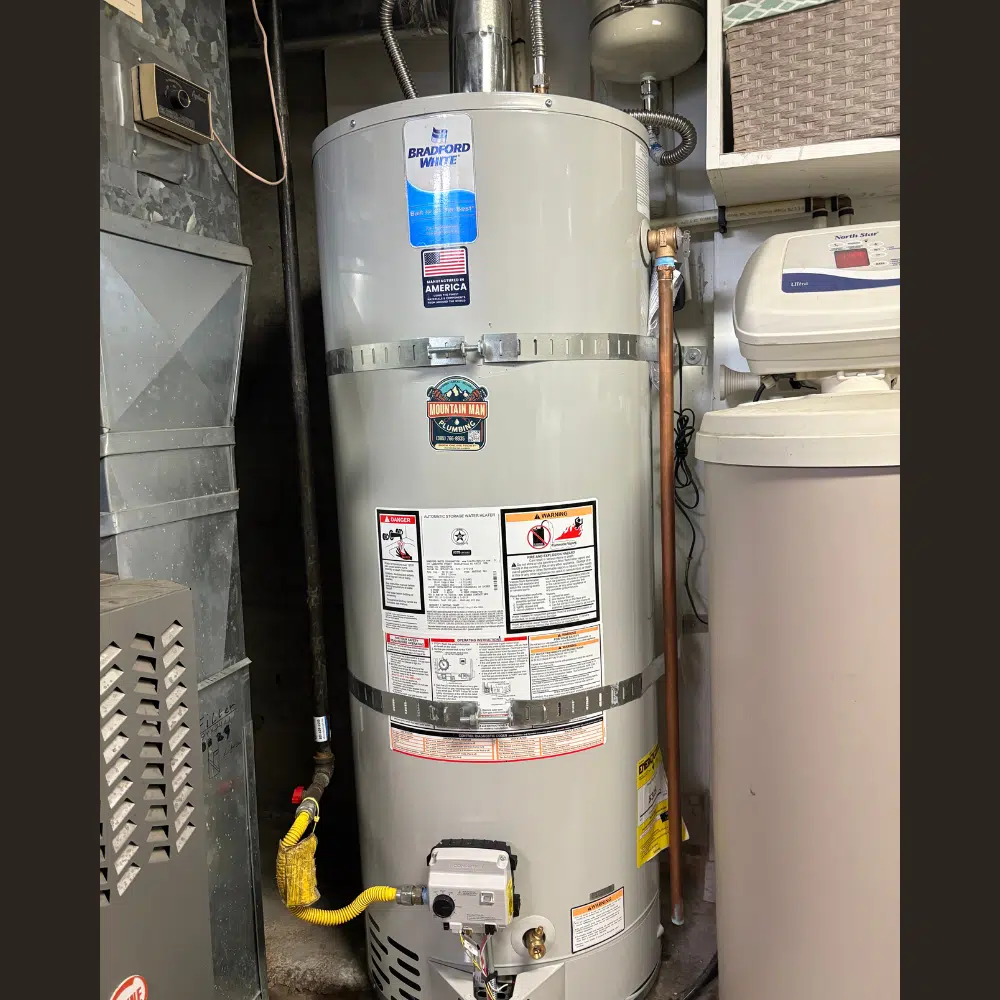
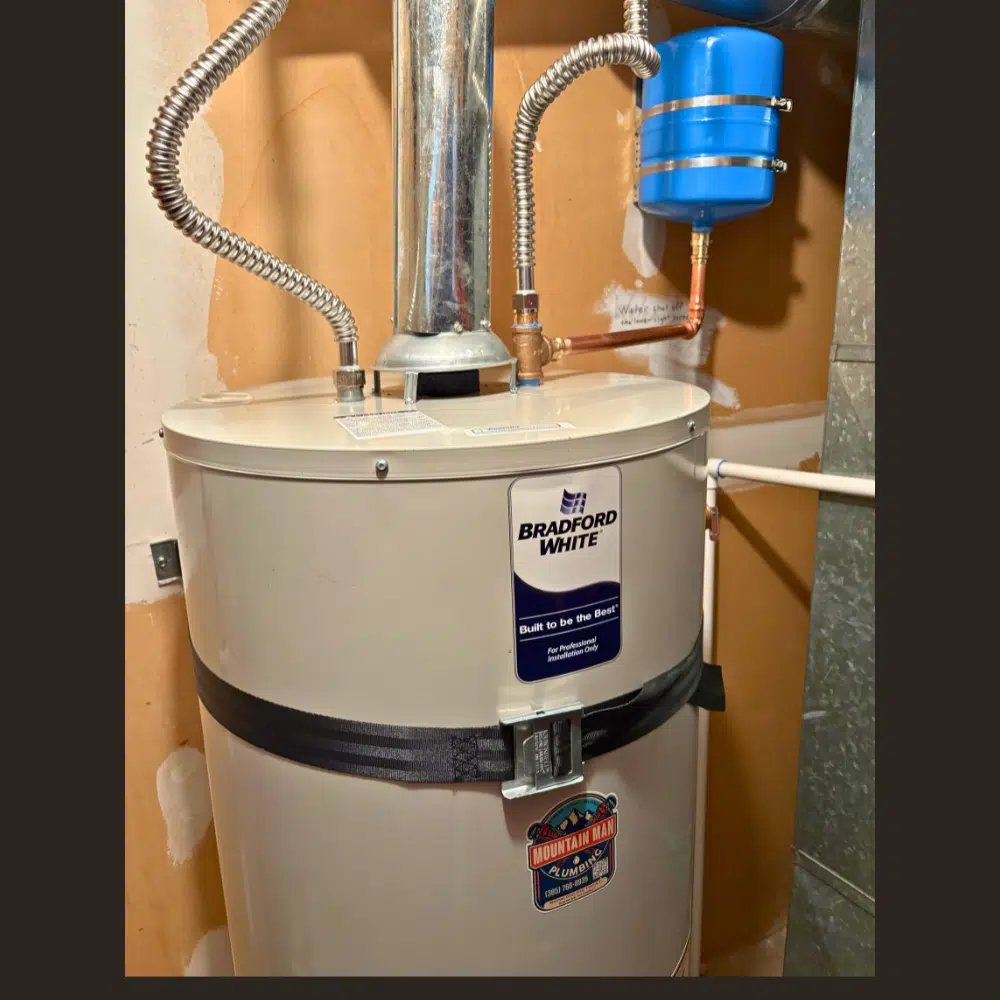
Recent Water Heater Installation Jobs



Still weighing it up?
Questions worth asking.
Which type is best for my house?
Start with the busiest hot-water period in your home, then compare equipment that can handle it. Space, fuel or electrical supply, venting and drainage determine the changes needed to install each option.
Read the reference: ENERGY STAR · U.S. Department of Energy
Can I just buy the same number of gallons?
Gallons describe stored volume. First-hour rating adds how the heater performs during a busy hour. Compare that rating as well as the physical fit and connection requirements.
Read the reference: ENERGY STAR
Will tankless give me instant hot water?
It heats on demand, but cooled water in the pipe still has to leave before hot water reaches the tap. Ask about the pipe distance and any compatible recirculation arrangement.
Read the reference: U.S. Department of Energy
What if I do not need a new heater?
The repair guide helps you work through a leak, short shower or error message. Note when the problem happens and what you see so we can find the cause.
Why is there no instant installation price?
Access, gas or electrical upgrades, vent changes and new drain routes can add to the installation. The estimate should name those changes so you can see where the price comes from.
Customer feedback
Hear it
from our customers.
Read the feedback in full, alongside the actual job records above.
Follow the evidence.
Keep the context.
These manufacturer and technical references explain the equipment and planning checks in this guide.
- ENERGY STAR · Water heater ratings ↗
First-hour rating, gallons per minute and energy-efficiency terminology.
Reference checked 2026-09-09 - ENERGY STAR · Heat-pump design considerations ↗
Air, sound, room temperature, condensate and model-dependent electrical requirements.
Reference checked 2026-09-09 - ENERGY STAR · Heat-pump installation planning ↗
Access to controls, filters, service connections and drainage.
Reference checked 2026-09-09 - U.S. Department of Energy · Transitioning to tankless ↗
2012 building-science guide: demand, delivery distance and gas/electric conversion considerations. Not a current price list or local code.
Reference checked 2026-09-09 - A. O. Smith · Residential gas tank manual ↗
Example gas-tank requirements for venting, water pressure, expansion and relief discharge. Match the manual to the installed model.
Reference checked 2026-09-09 - Amtrol · BoilerMate installation and operation ↗
How an indirect tank uses boiler heat; product-specific manual and performance information.
Reference checked 2026-09-09
Public records, reading formats & update history
Download the equipment guide, checklist and questions below. Recent installations appear in the project section as new jobs are published.
Maintained by: Mountain Man Plumbing. Plan a residential water-heater replacement in Sandy and the Salt Lake Valley. Compare hot-water delivery, equipment choices and the work needed to connect each option in your home.
- 2026-09-09 · 1.0.1: Clarified equipment-selection explanations and the checks used to assess electrical, gas and hot-water capacity.
- 2026-09-09 · 1.0.0: Replaced the legacy installation guide with linked equipment, planning, terminology and source records.
The price, in plain terms
What does the
price cover?
- Name the work.What's being repaired or installed, and what stays.
- Check what's included.Parts, labor, access, cleanup and any required permit.
- Settle the open questions.Extra work, exclusions and the warranty for this job.
A quote for water heater installation should make the scope clear. Check who handles access and patching, whether any further diagnosis costs extra, and what happens if opening things up reveals more damage.
Found a lower number? Ask us why ours is different. Bring both descriptions of the work. Compare the equipment, repair scope and exclusions before deciding what the difference buys. A higher price alone doesn't prove a better job.
- What a water heater installation costs in Utah What changes the cost and what to ask before agreeing. On Utah Plumbing Prices, which we publish.
- Already have a quote? Check it Use our second-opinion tool to work through the job and the price you've been given.
- How plumbing pricing works Flat rate, hourly, dispatch fees, permits: what each one means for what you pay.
From our local guides
Older homes. New plumbing projects.
Our county-record analysis shows when the neighborhoods were built. The repair guides explain the fixtures, pipes and remodel work.


