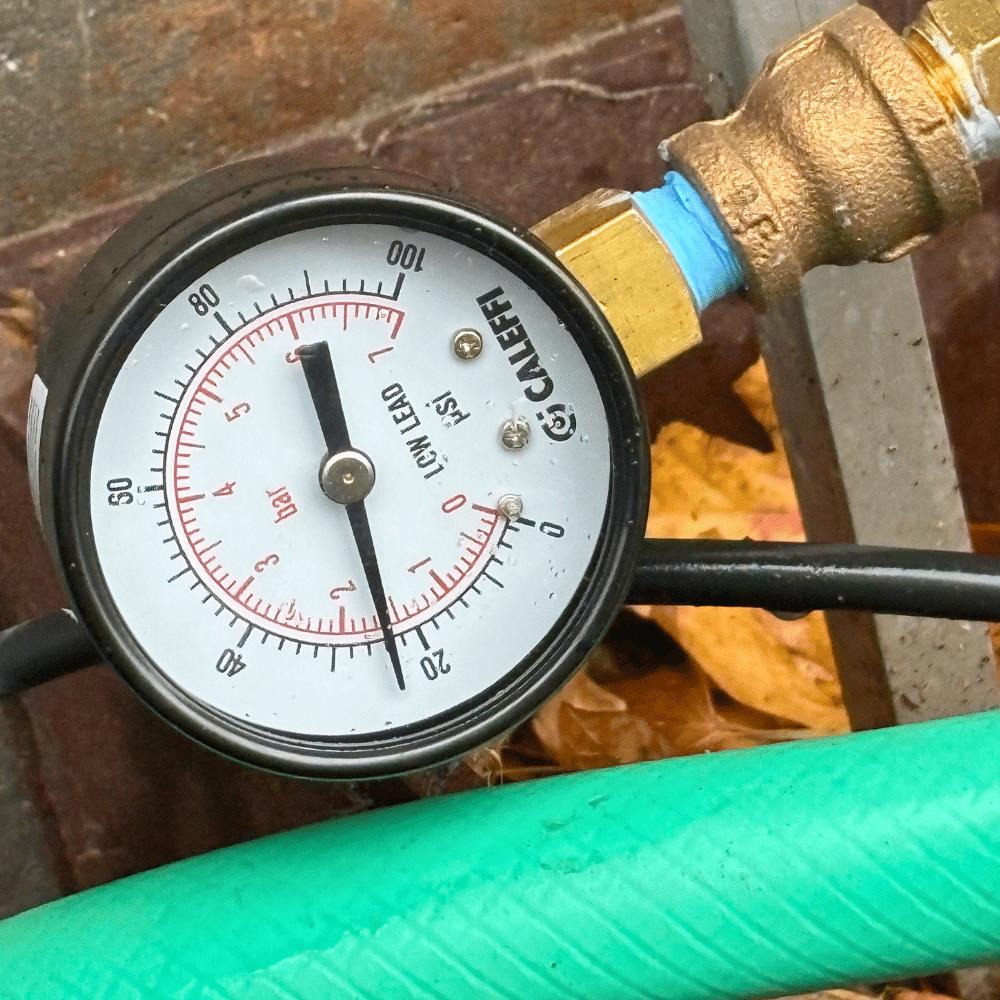
Water pressure hub
WATER PRESSURE
& PRV SERVICE.
Understand the pressure reaching your home, find what causes strong or weak flow, and see how a pressure-reducing valve (PRV) works. Start with your symptoms or explore the parts inside. When you need a repair, we test the system and fix the cause.

Long story short
We diagnose water-pressure problems and repair or replace pressure regulators. Weak flow, excessive pressure or pressure that keeps changing—tell us what you're noticing. We'll test the system and explain what needs fixing.
Jump to: Where do you want to start · Strong. Weak. Or all over the place · Small spring. Big responsibility · Put a number to the pressure
Skip the read? Book a visit or text (385) 766-8935.
Start with what changed
Strong. Weak.
Or all over the place?
A pressure-reducing valve—usually shortened to PRV—controls the water entering your home. We check how the whole system responds before deciding which part needs work.
Learn to read the gauge →Pressure is too high
Measure it with all water use stopped. A failed regulator can let the higher supply pressure reach your fixtures. Pressure that rises during water heating also calls for checking the expansion tank.
The shower fades when another tap opens
Check pressure with water running. A clogged screen, worn regulator, partly closed valve or restricted piping can limit delivery. Compare the regulator's inlet and outlet to narrow the search.
The pipes bang or the valve chatters
Check the pressure, then look at how quickly valves close and how the pipes are supported. Regulator wear and an unsuitable valve size can also cause noise. Appliance shutoffs may need water-hammer arresters.
The regulator is leaking
Find the first wet point: connection, union, body or spring cover. A serviceable gasket or internal part may be repairable; a damaged casting usually means replacing the valve.
The pressure bench / explore in 3D
Small spring.
Big responsibility.
The home valve uses a spring directly against outlet pressure. The larger valve uses a small pilot and water-filled control tubing to operate its main diaphragm.
The spring and outlet pressure balance. The seal rests on its seat and the water passage closes.
Selected part
Pressure, automatically controlled
Follow the water from the inlet to the outlet. Change the demand to see the regulating parts move.
The drawings explain the two operating principles. Use the part names to see what moves and what each part does.
Model notes & the commercial difference
Both regulators use flexible diaphragms. The home cutaway shows a direct-acting, spring-loaded reducing valve. The larger globe valve has a separate pressure-reducing pilot, an inlet restriction and a cover-control circuit. Its small tubes carry control water.
A pilot-operated station can handle large and changing demands. Selection includes minimum and peak flow, available pressure and the risk of cavitation—vapor bubbles forming and collapsing inside the valve during a large pressure drop. Some stations use multiple valves to cover that duty.
These mechanism models use consistent proportions within each assembly; each is fitted to the viewer separately. Motion is slowed and the section opened for visibility. The 120-to-50 psi example shows regulation, rather than a particular product's flow-performance curve.
Read more: Watts: LF25AUB pressure range & flow data ↗ · Cla-Val: 90-01 pilot-operated valve & circuit ↗
Pounds per square inch / psi
Put a number
to the pressure.
Pressure is the push behind the water. Flow is the amount coming through, usually measured in gallons per minute. A gauge reading becomes much more useful when you know whether water was running.
A common starting setting
A typical home works well around 40–60 psi. Many residential regulators, including the standard Watts LF25AUB, arrive set to 50 psi. We check the final setting against the home's fixtures and performance during use.
Above 80 psi at rest: the domestic supply needs pressure reduction. That upper limit is a trigger to act, rather than a target to set the house to.
A weak shower at a normal reading: repeat the measurement while another fixture runs. Restrictions show up under demand.
Read more: Oklahoma State University: residential pressure range ↗ · Watts: LF25AUB pressure range & flow data ↗ · ICC: residential water-pressure requirements, P2903.3.1 ↗ · Utah: adopted construction codes ↗
From the bench to the valley
Elevation gives
water its push.
Utah neighborhoods climb and descend hundreds of feet. Utilities divide their networks into pressure zones, using tanks, pumps and regulating stations to serve that terrain. Within a zone, a home farther below the water's pressure level can receive more pressure.
Every 100 feet of vertical drop adds about 43 psi of static pressure. The home's regulator brings that supply down to a useful household setting.
psi from elevation alone
Sandy uses pressure zones and utility PRVs too. Your address, zone and current demand determine the actual supply reading. This diagram isolates the effect of elevation.
Read more: Caleffi: plumbing pressure & elevation ↗ · Sandy City: water system & pressure zones ↗
A second source of rising pressure
Hot water grows
in volume.
As a tank water heater warms its stored water, that water expands. In a closed system, a working expansion tank accepts the extra volume. Without that space, the pressure can rise even with a correctly set regulator.
Follow a pressure rise between uses →heater
The expansion tank connects to the cold-water piping serving the heater, downstream of the regulator.
Our work / your water system
Repair the part.
Prove the result.
We check inlet pressure, service or replace the regulator, set the outlet with a gauge and run fixtures. We also check the adjoining shutoff and the system's thermal-expansion arrangement.
Questions from the house
Water pressure, explained.
What does a PRV do?
A pressure-reducing valve lowers incoming water pressure before it reaches the house plumbing. Inside, a movable seal narrows or opens the water passage as demand changes. You will usually find the home regulator near the main water shutoff.
What water pressure should my house have?
A typical home works well around 40–60 psi. Many residential regulators arrive set to 50 psi; a plumber checks that setting with a gauge and with water running. Building water pressure above 80 psi at rest needs pressure reduction. The final setting also depends on fixture ratings, the height of the house and losses through its pipes and equipment.
Why is the shower weak if the gauge looks normal?
A gauge with every tap closed shows pressure at rest. A clogged regulator screen, partly closed valve, filter or restricted pipe can still limit the amount of water available when taps open. A second reading with water running helps find that restriction.
Can a bad PRV make the pressure too high and too low?
Yes. A damaged seat can let pressure climb while the house is quiet. Debris or a stuck mechanism can limit flow during use. Measurements on both sides of the valve help separate regulator trouble from a supply or house-piping problem.
How long does a pressure regulator last?
Service life varies with water conditions, debris, pressure difference and use. Replace or rebuild it based on leakage, unstable pressure, restricted flow and the condition of its parts. An age estimate alone does not establish that a regulator has failed.
Will a new PRV stop water hammer?
Excessive pressure can make banging worse, so it belongs in the diagnosis. Fast-closing appliance valves, loose pipe supports and missing or failed water-hammer arresters may also need attention.
Recent and Related Plumbing Work


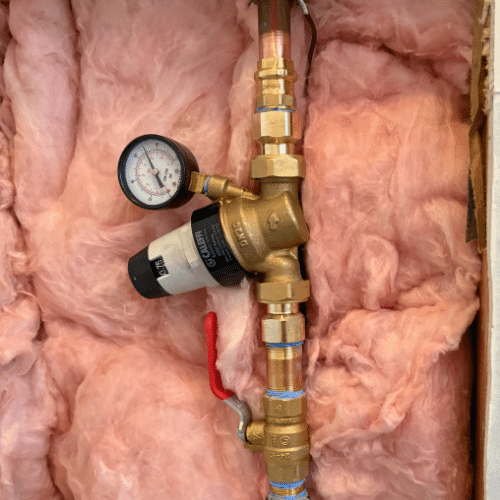
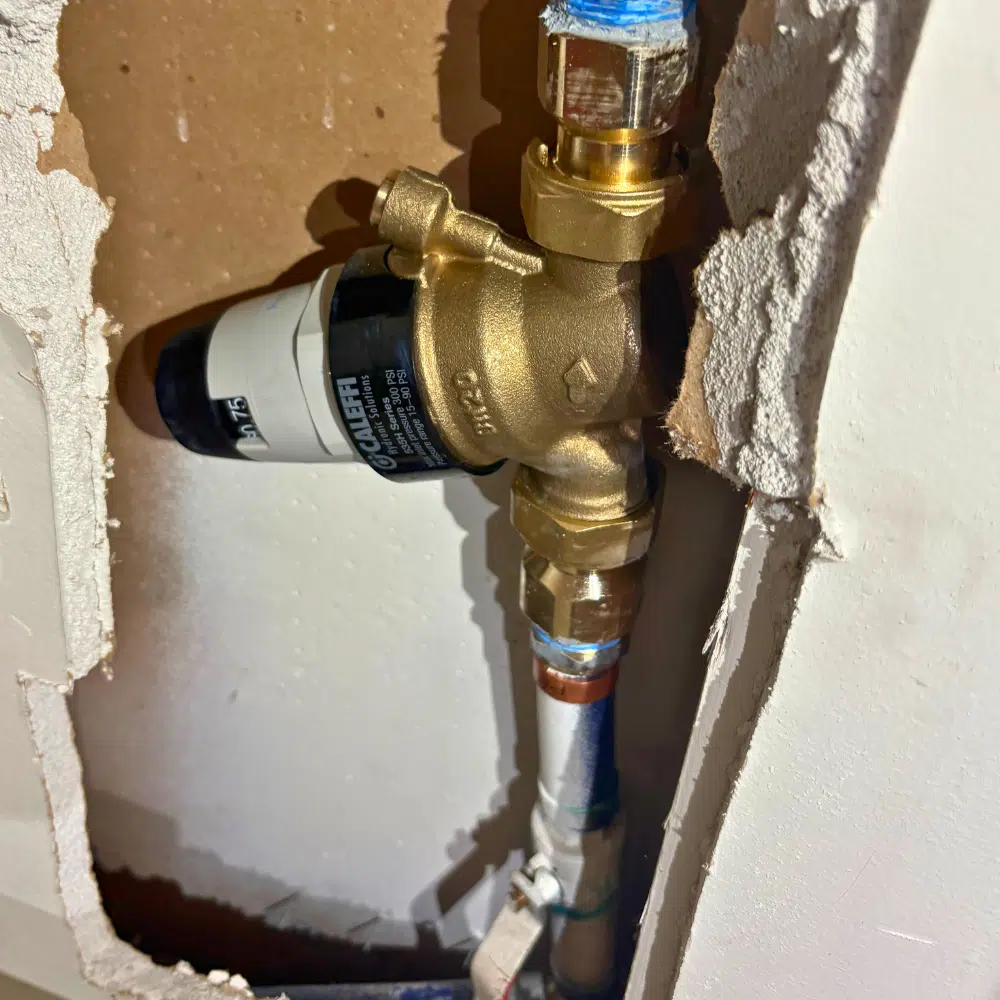
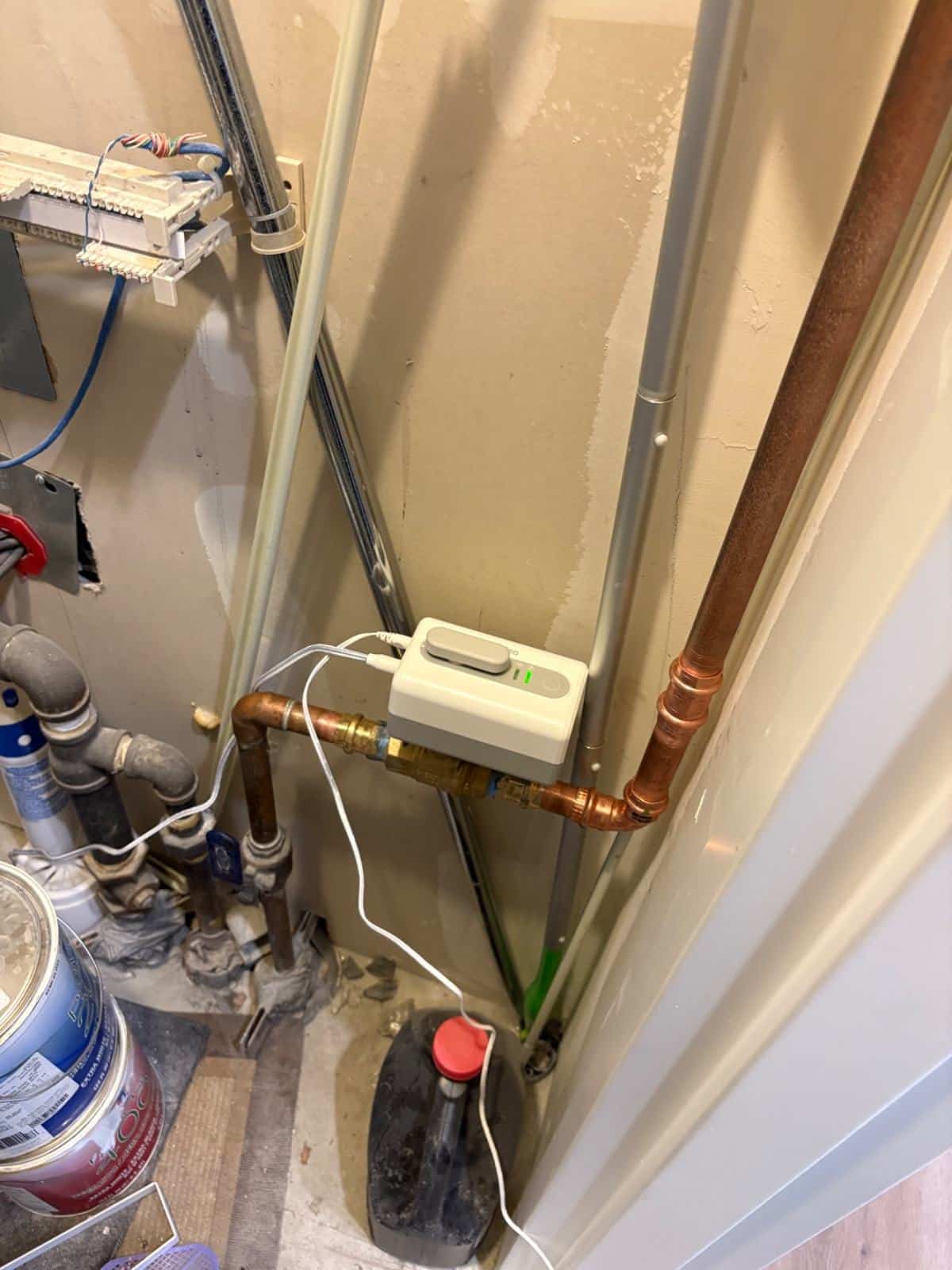

Mountain Man Plumbing / Salt Lake Valley
Get your water
under control.
Sources & public guide record
Guide data (JSON) · Read as plain text
- Watts: LF25AUB installation, adjustment & troubleshooting ↗
- Watts: LF25AUB pressure range & flow data ↗
- Cla-Val: 90-01 pilot-operated valve & circuit ↗
- Caleffi: plumbing pressure & elevation ↗
- Watts: thermal expansion in a closed system ↗
- ICC: residential water-pressure requirements, P2903.3.1 ↗
- Utah: adopted construction codes ↗
- Sandy City: water system & pressure zones ↗
- Denver Water: finding restricted flow in a home ↗
- Oklahoma State University: residential pressure range ↗
The price, in plain terms
What does the
price cover?
- Name the work.What's being repaired or installed, and what stays.
- Check what's included.Parts, labor, access, cleanup and any required permit.
- Settle the open questions.Extra work, exclusions and the warranty for this job.
A quote for pressure regulator work should make the scope clear. Check who handles access and patching, whether any further diagnosis costs extra, and what happens if opening things up reveals more damage.
Found a lower number? Ask us why ours is different. Bring both descriptions of the work. Compare the equipment, repair scope and exclusions before deciding what the difference buys. A higher price alone doesn't prove a better job.
- What pressure regulator work costs in Utah What changes the cost and what to ask before agreeing. On Utah Plumbing Prices, which we publish.
- Already have a quote? Check it Use our second-opinion tool to work through the job and the price you've been given.
- How plumbing pricing works Flat rate, hourly, dispatch fees, permits: what each one means for what you pay.
From our local guides
Pressure changes across the valley.
Read the local pressure-zone and reservoir research, then see how a home’s pressure regulator works.



MOUNTAIN MAN PLUMBING / DIY