
Disposal service hub
Garbage disposal
repair & replacement.
A hum, a leak or a sink full of yesterday’s dinner can stop the kitchen cold. We repair and replace garbage disposals, sort out their drain connections and help you choose a unit that fits the way you cook.
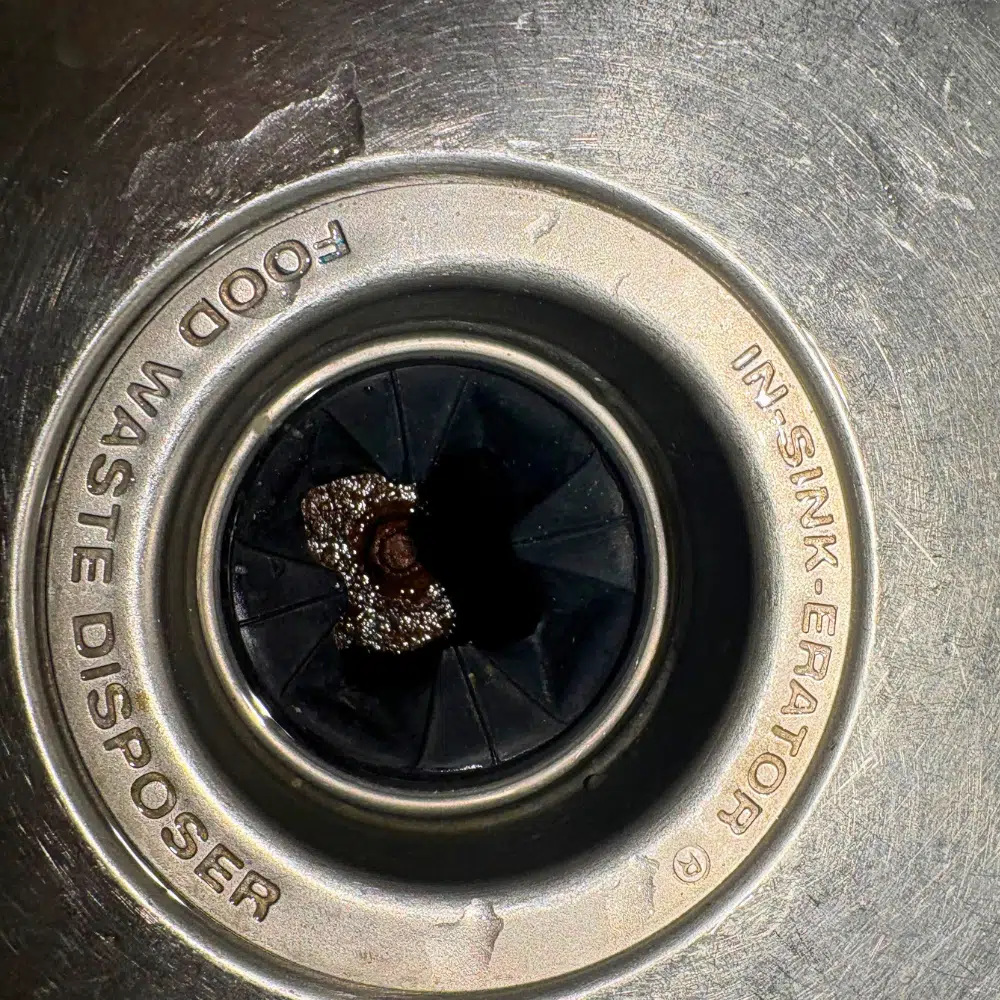
Long story short
We repair and replace garbage disposals, including leaks and problems with the drain connections. Whether yours hums, won't start or has water dripping underneath, we can check it and help you choose between fixing it and putting in a new one.
Jump to: Replace it or try to save it · How much disposal do you want · A jammed disposal may not need replacement · Show us under the sink
Skip the read? Book a visit or text (385) 766-8935.
First, what sounds closest?
Replace it or try to save it?
Three clear choices
How much disposal do you want?
Every option includes normal removal, installation, connection, testing, and cleanup.

Budget
Badger 1
1/3 HPA simple, reliable replacement for lighter everyday use.
Best for rentals, small households, and basic cleanup
Choose budget →
Preferred
Badger 5XP
3/4 HPMore grinding power without paying for premium sound control.
The best fit for most busy kitchens
Choose most popular →
Premium quiet
Pro 750
3/4 HPPremium construction and noticeably quieter operation.
Best near living areas and open kitchens
Choose premium quiet →
Worth checking first
A jammed disposal may not need replacement.
If it hums, jams, or stopped turning, book the repair path. If the motor has failed, your plumber already knows which replacement choices you were considering.
Book a repair visit →Optional photo
Show us under the sink
One photo helps us arrive prepared. Skip it if you do not have one.
Power: The ⅓ HP choice suits lighter use. The ¾ HP models provide more turning force for everyday grinding.
Quiet: The PRO 750 adds sound insulation and multiple grinding stages. Horsepower alone does not tell you how loud a unit will be.
Check the fit under your sink →Read more: InSinkErator disposal comparison ↗ · InSinkErator PRO 750 specifications ↗
A kitchen workhorse / open it up
From the sink.
Through the grinder.
Turn the assembly, open the housing and follow the working parts. The grind plate throws scraps against a fixed ring; water carries the particles into the drain.
Loading the disposal cutaway…
Under the sinkDrag to turn. Select a part to see what it does and what can go wrong.
About the assembly & parts index
Built from the Badger dimensional layout and installation references. The cutaway illustrates a single-stage grinder; the motor winding and water-flow details are teaching geometry. Rotation is slowed so you can follow it. The outer dimensions follow the Badger 5XP reference: 12⅝ inches high and 6⁵⁄₁₆ inches across. The sink, trap and cabinet show the connected installation.
Read more: InSinkErator Badger 5XP specifications ↗ · InSinkErator: how the grind plate and ring work ↗ · InSinkErator: replacement connections ↗
- The disposal and its drain
- Food enters from the sink. The motor turns a grinding plate inside the upper chamber, and water carries the small particles through the side outlet into the P-trap.
- Sink flange & three-point mount
- The stainless flange seals against the sink. A fiber gasket, backing flange and mounting ring clamp underneath; three locking tabs carry the disposal’s weight.
- Rubber splash baffle
- Flexible rubber fingers surround the opening. They help contain splash and reduce the chance of loose material flying upward.
- Grinding plate & swivel lugs
- The motor turns a steel plate. Two blunt lugs swivel on the plate and push scraps outward against the grind ring.
- Stationary grind ring
- Raised edges and openings around the chamber break the scraps down. Small particles and water pass into the discharge space outside the ring.
- Motor, shaft & water seal
- The motor sits below the wet chamber. Its shaft turns the plate through a sealed bearing area that keeps wastewater out of the motor.
- Discharge elbow & gasket
- The side outlet carries ground scraps and water to the drain. A gasket seals the elbow to the housing; the drain tube connects to the trap.
- P-trap & wall drain
- The curved pipe holds a water seal that blocks sewer gas. Water flows over the trap’s outlet and along the horizontal arm into the wall drain.
- Dishwasher inlet & hose
- The dishwasher pumps used water through this smaller upper inlet. A new unit ships with a knockout closing that connection.
- Overload reset & wrench socket
- This Badger-style unit has a manual overload reset underneath and a separate center hex socket for its jam-release wrench.
- Power connection
- A corded unit plugs into a suitable supply; a hardwired unit connects through its protected wiring compartment. The switch controls that supply.
Repair before replacement
Listen. Look.
Find the failed part.
A stuck grind plate, a leaking drain joint and a failed motor each lead to a different repair.
Open the full repair guide →It hums but does not turn
The motor has power, but the plate may be jammed. Switch it off promptly. Disconnect power before freeing the mechanism or removing a trapped object with tongs. Keep hands out of the chamber.
The jam and reset sequence →Water appears underneath
Start at the first wet connection. A sink seal, dishwasher hose or discharge gasket can often be repaired. Water escaping through a corroded case or internal shaft seal usually points toward replacing the disposal.
Find the source of a leak →The motor runs; the sink backs up
The blockage may be in the outlet, trap or shared kitchen drain. A new motor will not clear that pipe. Stop feeding food and check where drainage is restricted.
Follow the drain →Nothing happens at the switch
The electrical supply, switch, overload protector or motor may be responsible. A reset that trips again needs the cause found before further use.
Work through a silent unit →Scrape first / grind the little leftovers
Does it go
in the disposal?
A disposal handles small scraps left after clearing a plate. Large loads, grease and stringy waste make more work for the grinder and the drain.
Small amounts
Small, soft food scraps
Soft bits left after scraping the plate can be fed gradually with cold running water. Remove bones and packaging first.
Keep out
Grease, oil & fat
Cool grease in a container and put it in the trash. It coats and builds up inside drain pipes.
Trash or compost
Potato peels & fibrous scraps
Peel piles and stringy scraps can pack the outlet or collect in the drain. Scrape them into the trash or an accepted compost stream.
Scrape it out
Rice, pasta & dough
Sticky, starchy masses can collect in the trap and branch drain. An entire pan of leftovers belongs in the trash or accepted compost.
Trash or compost
Coffee grounds & eggshells
Grounds and shell fragments add settling solids to the drain. Eggshells do not sharpen the grinding parts.
Keep out
Bones, pits & hard shells
Large bones, fruit pits and hard shells can jam or damage the mechanism. Put them in the trash.
Never grind
Utensils, glass & packaging
Hard objects can be thrown or damage the unit. Switch off and disconnect power before retrieval; use tongs for visible loose objects.
Keep out
Drain cleaner & chemicals
Avoid caustic drain openers and household chemicals in the disposal. Use a disposal cleaner permitted by the unit’s manufacturer.
Scrape bulk food into the trash or an accepted compost collection. The care guide explains everyday use, cleaning and the extra solids a disposal sends to a sewer or septic tank.
Food, cleaning and septic guidance →Good questions
Disposal service, explained.
Does a garbage disposal have blades?
It uses a rotating plate with blunt swivel lugs. The lugs push scraps against a stationary grind ring around the chamber. Water carries the small particles through the ring and into the drain.
Should I replace a disposal that hums?
A hum can mean the motor is powered but the plate is jammed. Switch it off promptly. A removable obstruction can make repair worthwhile; a seized or damaged motor may call for replacement.
Why does the dishwasher stop draining after a disposal replacement?
The new disposal’s dishwasher inlet may still have its knockout plug. A kinked or obstructed hose can cause the same symptom. The installer checks the inlet, hose routing and a dishwasher drain cycle.
Is a bigger motor always the better choice?
Motor power is one factor. Sound insulation, grind design, cabinet clearance, drain height and your cooking habits also matter. A quieter ¾ HP model can be a more useful upgrade than extra horsepower alone.
Can you remove the disposal and install a regular drain?
Yes. We can fit a sink strainer and reconnect the drain, including a suitable dishwasher drain connection when needed. That is a useful option for a household that scrapes its food waste into the trash or compost.
Recent and Related Plumbing Work

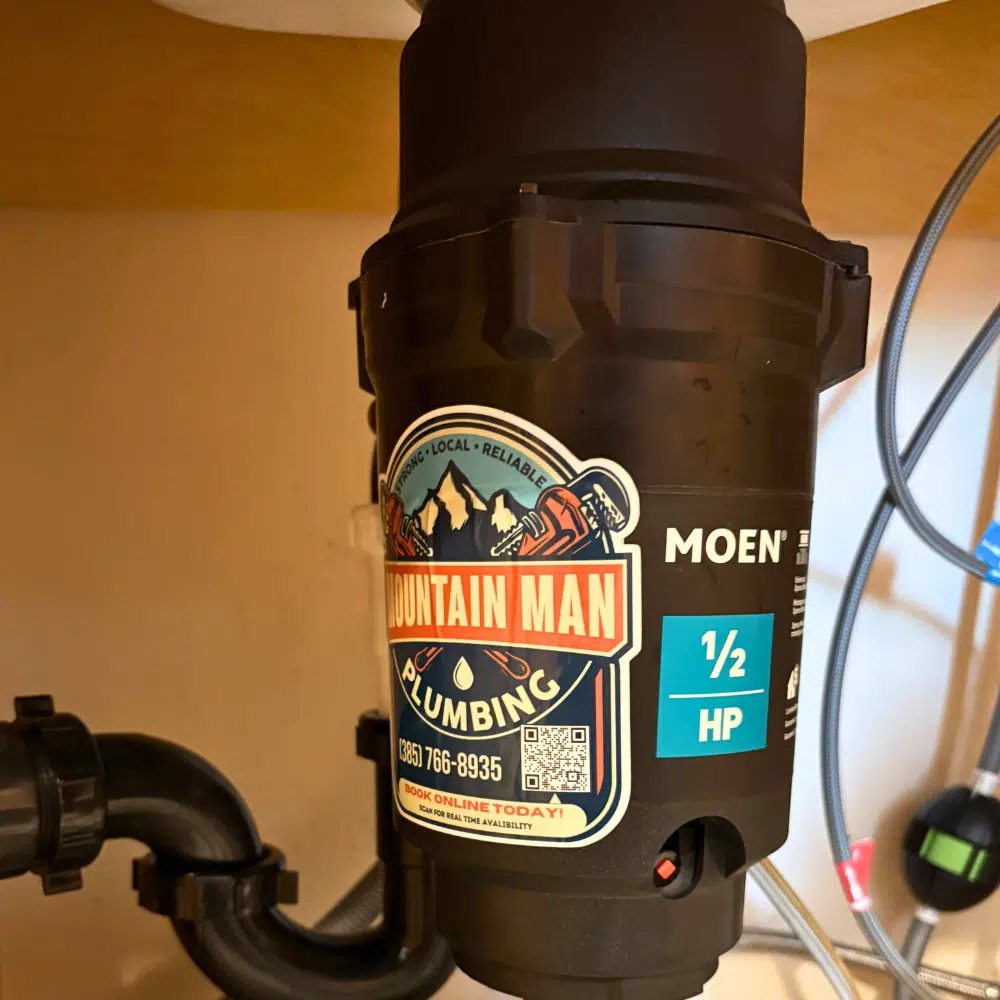
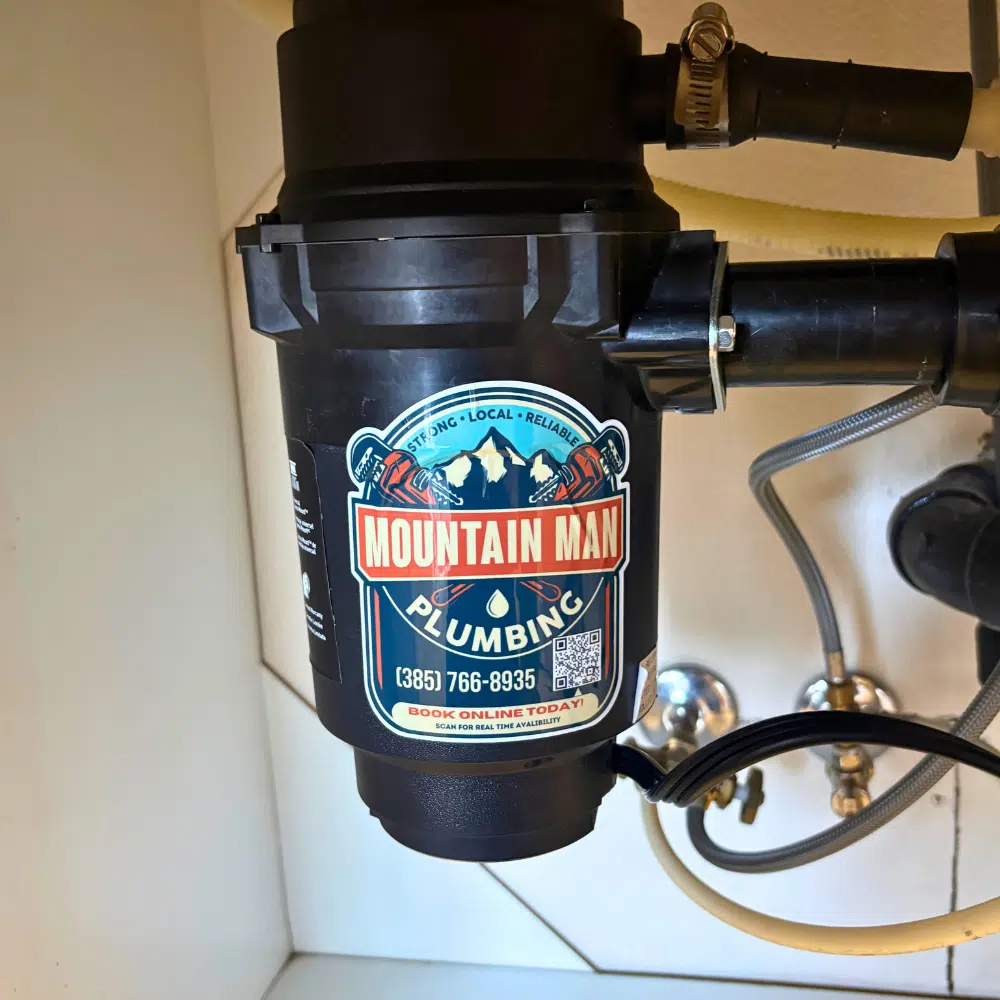
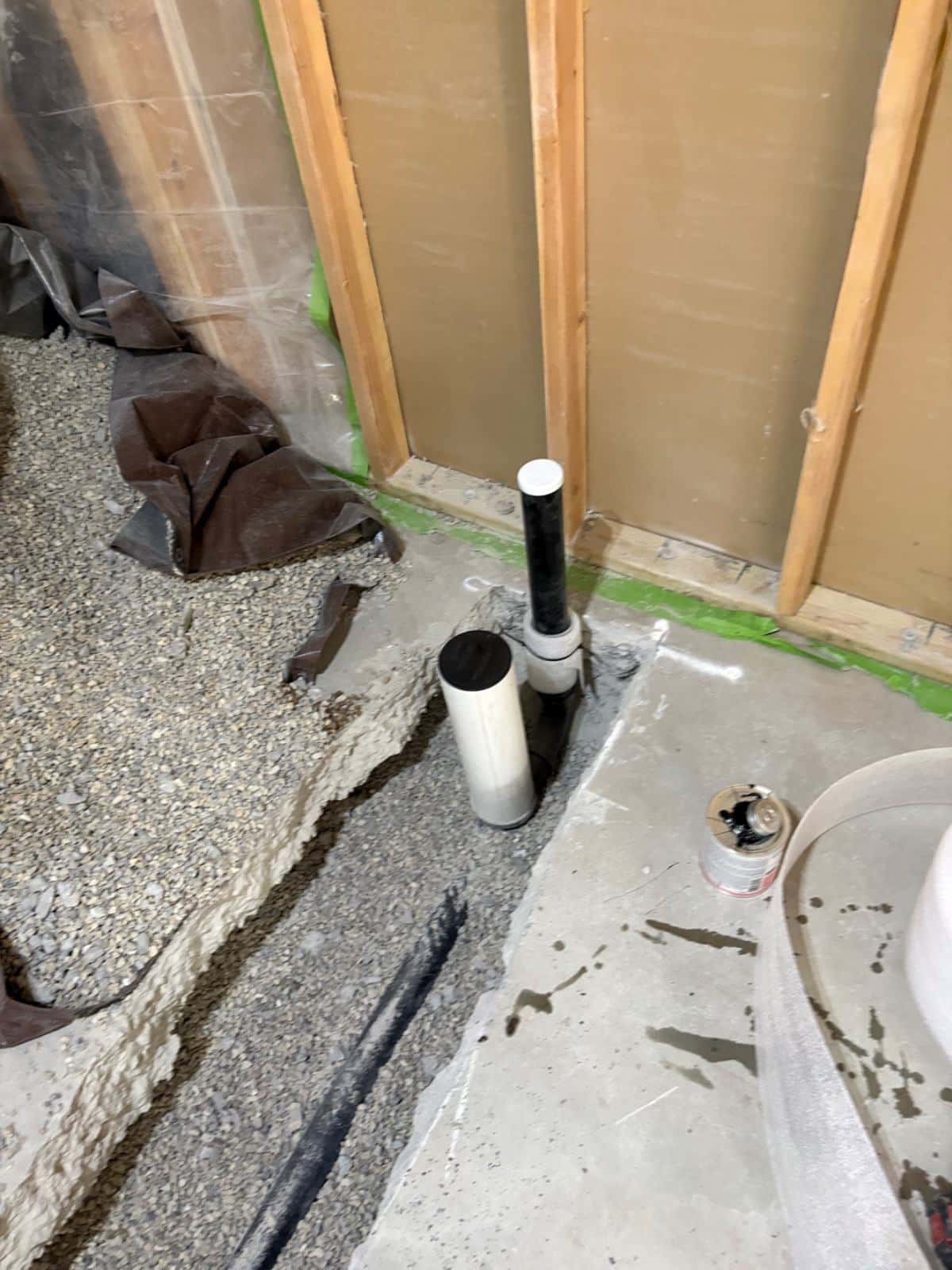


Let’s get the kitchen moving again
Save the unit.
Or choose its replacement.
Sources & public guide record
Guide data (JSON) · Read this page as plain text
- InSinkErator: how the grind plate and ring work ↗
- InSinkErator Badger 5 drawing and specifications ↗
- InSinkErator Badger 5XP specifications ↗
- InSinkErator disposal comparison ↗
- InSinkErator PRO 750 specifications ↗
- InSinkErator: freeing a jam ↗
- InSinkErator: finding a disposal leak ↗
- InSinkErator: disposal and drain blockages ↗
- InSinkErator: cleaning the baffle and chamber ↗
- InSinkErator: replacement connections ↗
- InSinkErator: everyday food waste ↗
- Salt Lake City: fats, oils, grease and food waste ↗
- EPA: caring for a septic system ↗
- Whirlpool: operating a batch-feed disposal ↗
The price, in plain terms
What does the
price cover?
- Name the work.What's being repaired or installed, and what stays.
- Check what's included.Parts, labor, access, cleanup and any required permit.
- Settle the open questions.Extra work, exclusions and the warranty for this job.
A quote for disposal work should make the scope clear. Check who handles access and patching, whether any further diagnosis costs extra, and what happens if opening things up reveals more damage.
Found a lower number? Ask us why ours is different. Bring both descriptions of the work. Compare the equipment, repair scope and exclusions before deciding what the difference buys. A higher price alone doesn't prove a better job.
- What garbage disposal work costs in Utah What changes the cost and what to ask before agreeing. On Utah Plumbing Prices, which we publish.
- Already have a quote? Check it Use our second-opinion tool to work through the job and the price you've been given.
- How plumbing pricing works Flat rate, hourly, dispatch fees, permits: what each one means for what you pay.
From our local guides
Older homes. New plumbing projects.
Our county-record analysis shows when the neighborhoods were built. The repair guides explain the fixtures, pipes and remodel work.


MOUNTAIN MAN PLUMBING / DIY