
LET’S GET YOUR DAY MOVING AGAIN.
Drain
cleaning.
A sink full of water. A shower that won’t drain. We find what’s in the way, explain the options, and get your home moving again.
Clear pricing before work. Care for your home.
Long story short
We clear clogged sinks, tubs, showers and household drains. If a blockage keeps coming back, we can investigate what's behind it and explain the next step. Tell us which fixtures are backing up and how long it's been happening.
Jump to: One drain. Several drains. That difference matters · Your whole home. Connected below the surface · Find your problem. Find your next step · Drain cleaning in Sandy & across the valley
Skip the read? Book a visit or text (385) 766-8935.
One drain. Several drains.
That difference matters.
You don’t need to know where the pipe goes. Tell us which fixtures are affected, what happens first, and whether it’s happened before.
Just this drain.
The trap is the water-filled bend below the fixture. Its branch pipe carries waste to the shared drain. Explore where a clog can collect along that route.
See the fixture drains ↗ SEVERAL FIXTURESIt’s backing up everywhere.
A shared branch or main may be restricted. The lowest drain can be where the backup appears.
Follow the main drain ↗ IT KEEPS COMING BACKAgain? Let’s find out why.
Inspect the route for roots, deposits and damaged sections.
Look below ground ↗Your whole home.
Connected below the surface.
Turn the house. Pick a drain. Follow the path from a familiar fixture to the sewer—and see what a plumber can do when that path gets blocked.
Opening the house cutaway…
Use the controls or select a location below.
THE TROUBLE SPOT
Kitchen sink
Grease, food and buildup can collect in the trap and the branch beyond it. Keep grease out of the drain, including when using a disposal.
One sink backing up points us toward its trap or branch first.
Where we get in
Removable trap or a suitable branch cleanout.
HOW IT’S CLEARED / PICK A METHOD
Remove local buildup
Remove hair and debris caught at the stopper or strainer. A removable trap gives access to buildup just below the sink.
Accessible debris is removed at the fixture. The enlarged view shows a local obstruction.
A cleanout is a capped opening used to reach the drain with clearing equipment or a camera. Select a fixture to see its access points; the close-up shows each tool working inside the pipe.
Read the drainage guide without using 3D
Kitchen sink
Grease, food and buildup can collect in the trap and the branch beyond it. Keep grease out of the drain, including when using a disposal.
Access: Removable trap or a suitable branch cleanout.
Possible methods: Remove local buildup, Drain cable, FlexShaft cleaning, Camera inspection
Laundry standpipe
Lint and detergent residue can restrict the trap or laundry branch. An overflowing standpipe can also involve pipe sizing or the washer connection.
Access: Standpipe or an accessible branch cleanout, using a tool sized for that line.
Possible methods: Drain cable, FlexShaft cleaning, Camera inspection
Bathroom sink
Hair and soap collect around the stopper, tailpiece and P-trap. A blockage can also sit farther along the trap arm.
Access: Stopper and removable trap first; branch access if the blockage is farther in.
Possible methods: Remove local buildup, Drain cable, Camera inspection
Toilet & closet bend
Paper, wipes or a foreign object can lodge in the toilet’s built-in trapway. The branch below the floor can clog too.
Access: A toilet auger protects the bowl. Downstream work may need a cleanout or removal of the toilet.
Possible methods: Toilet auger, Drain cable, Camera inspection
Shower drain
Hair and soap catch at the strainer, trap and shower branch. A low shower drain may also be where a shared-line backup appears.
Access: Strainer and drain opening, or a branch cleanout. Tub access often differs from shower access.
Possible methods: Remove local buildup, Drain cable, Camera inspection
Shared building drain
Waste from the fixture branches meets here. Buildup or an obstruction downstream can affect several rooms at once.
Access: Accessible full-size cleanout, with the direction of the blockage established first.
Possible methods: Drain cable, FlexShaft cleaning, Camera inspection, Hydro-jetting, Repair the cause
Underground sewer lateral
Roots can enter defective joints. Scale, displaced joints, a low spot or a damaged section can catch waste on its way to the public sewer.
Access: Exterior cleanout; inspection and locating help establish where a repair would be needed.
Possible methods: Camera inspection, FlexShaft cleaning, Drain cable, Hydro-jetting, Repair the cause
Vent to the roof
The vent admits and releases air so traps can keep their water seals. A blocked vent or incorrect venting can cause drainage symptoms without a waste clog.
Access: Inspect the vent arrangement and trap seals. Roof access requires appropriate fall protection.
Possible methods: Check venting & traps
Behind every clear drain.
There’s a little dirty work.
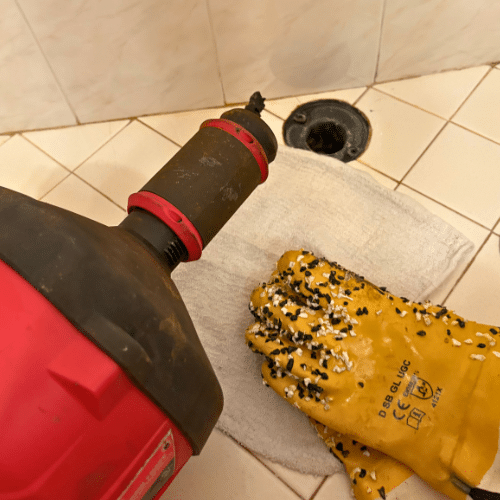
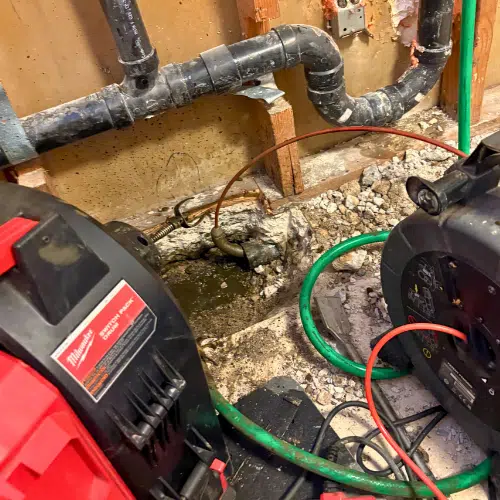
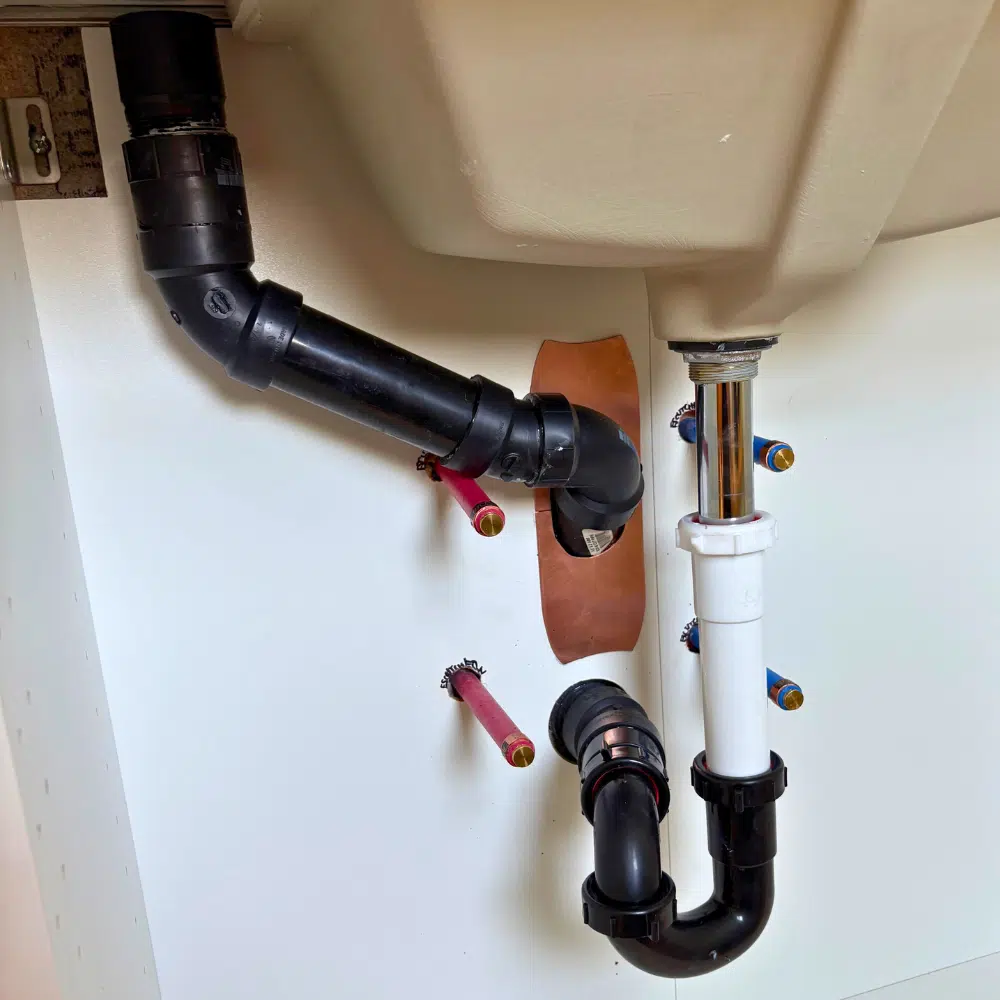
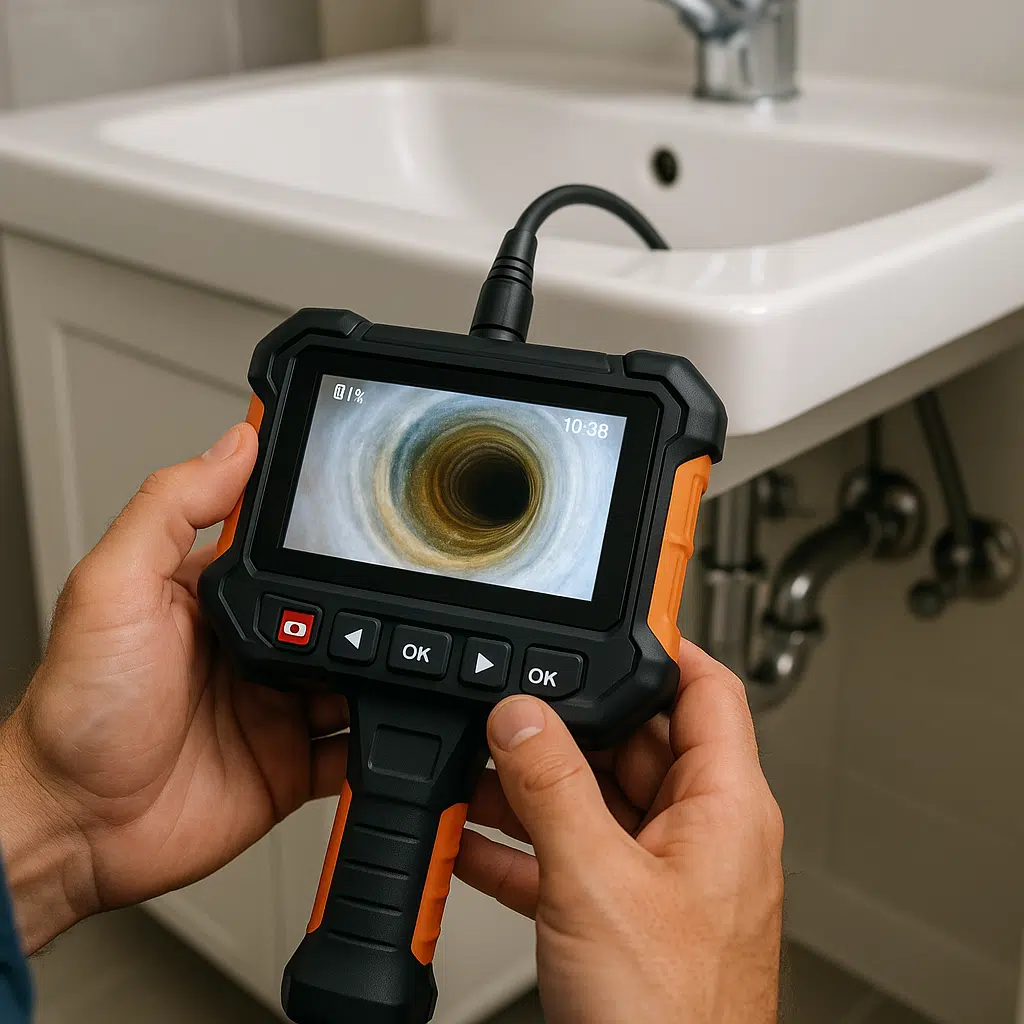
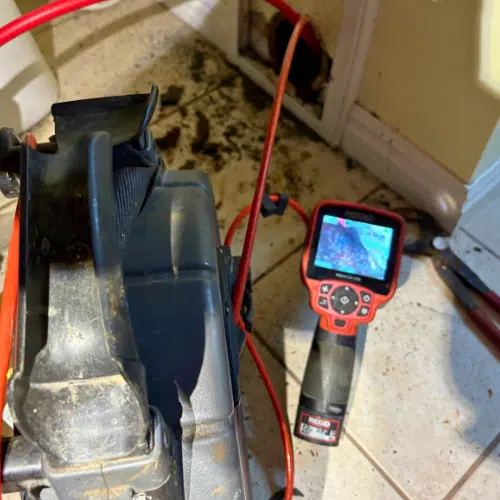
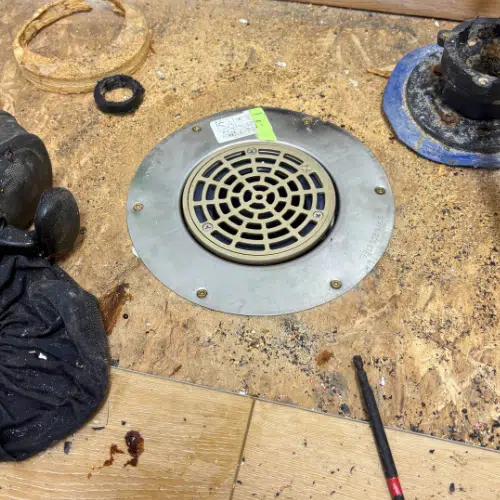
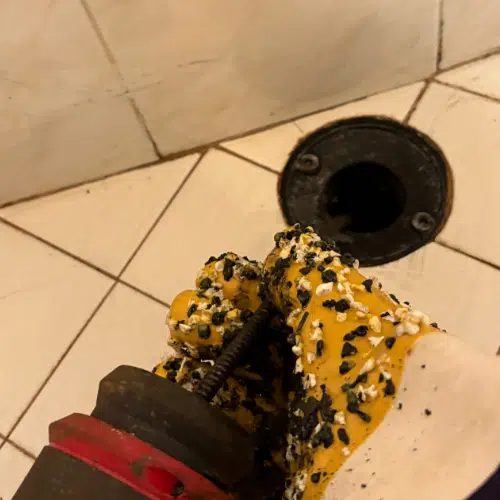
Photos and stories from our drain-work feed. See what we found, where we got access, and what happened next.
Recent Drain Cleaning Jobs
Find your problem.
Find your next step.
A clogged drain, a broken fixture and a damaged sewer need different work. These guides help you tell us what’s happening.

Sink & disposal
A slow kitchen sink, leaking trap or a disposal that won’t work.
Sink repairs ↗Garbage disposals ↗
Shower, tub & toilet
Water at your feet, a blocked toilet or trouble with a bathroom fixture.
Showers & tubs ↗Toilet repairs ↗
Main drain & sewer
Several fixtures backing up or a clog that keeps returning.
Sewer & underground ↗Get a second opinion ↗LOCAL DRAIN CLEANING / FIND YOUR CITY
Drain cleaning in Sandy & across the valley.
Based in Sandy, we help homeowners across the Salt Lake Valley and nearby communities. Choose your city for local plumbing information and completed work.
A little less guessing.
A clear next step.
Tell us the symptoms. We’ll explain the work and pricing before you decide.
How much does drain cleaning cost?
Tell us which fixture is backing up and what happens when other fixtures run. The line’s access and the type of blockage guide the equipment and price. We explain the proposed work before starting and discuss any additional repair the inspection reveals.
Do you handle main sewer clogs and camera inspections?
Yes. We work on residential fixture drains, branches and main lines, using appropriate cable equipment, FlexShaft cleaning and camera inspection. A camera is most useful when the line is accessible and clear enough to see.
Do you offer hydro-jetting?
We do not operate a hydro-jetter. If pipe condition and the blockage call for jetting, we can refer you to a specialist. The explorer shows how jetting works and when a specialist referral fits.
Why does the same drain keep clogging?
A recurring blockage can come from deposits left on the pipe wall, growing roots or a damaged section. We inspect the route so the next job addresses that cause, whether it needs more thorough cleaning or a pipe repair.
What should I do before you arrive?
Avoid running water into a backed-up line. Clear a path to the affected fixture and any known cleanout. Tell us if a chemical product has been used; do not add another product or mix cleaners. Keep people and pets away from sewage.
Does a bad smell mean the sewer is clogged?
Not necessarily. An unused trap may have dried out, or there may be buildup, a seal problem or a venting defect. Tell us where the odor is strongest and whether the drain is also slow.
Can you give a second opinion on a sewer replacement quote?
Yes. Share the quote and any inspection video through Instant Second Opinion. What the pipe shows, where the problem is, and what a repair would touch should guide the recommendation.
About the drainage model & technical references
The cutaway shows fixture traps, their vents and the drain route to the sewer. Select a fixture to follow that path and see where a blockage or damaged pipe affects the home.
The price, in plain terms
What does the
price cover?
- Name the work.What's being repaired or installed, and what stays.
- Check what's included.Parts, labor, access, cleanup and any required permit.
- Settle the open questions.Extra work, exclusions and the warranty for this job.
A quote for drain cleaning should make the scope clear. Check who handles access and patching, whether any further diagnosis costs extra, and what happens if opening things up reveals more damage.
Found a lower number? Ask us why ours is different. Bring both descriptions of the work. Compare the equipment, repair scope and exclusions before deciding what the difference buys. A higher price alone doesn't prove a better job.
- What drain cleaning costs in Utah What changes the cost and what to ask before agreeing. On Utah Plumbing Prices, which we publish.
- Already have a quote? Check it Use our second-opinion tool to work through the job and the price you've been given.
- How plumbing pricing works Flat rate, hourly, dispatch fees, permits: what each one means for what you pay.
From our local guides
Older homes. New plumbing projects.
Our county-record analysis shows when the neighborhoods were built. The repair guides explain the fixtures, pipes and remodel work.


