
Water heater estimate
What did the plumber put on your water-heater estimate?
Here is what the part name means, what it does, and why it may belong on the job.
Compare the included work: equipment, connections, venting, pressure control, permits, removal and warranty.
How to read the quote
Every line should earn its place on the estimate.
A useful estimate explains the finding behind each item and the labor and materials included. Ask what the technician found and how the proposed work addresses it.
Plumber terms, explained
Six common parts, translated into plain English.
Anode rod
A metal rod that corrodes as it protects the steel tank. Checking and replacing a depleted anode can help extend the life of a sound tank.
Dip tube
A tube that carries incoming cold water to the bottom of the tank. If it breaks, cold water mixes near the hot outlet and your shower can turn cold much sooner.
T&P valve
The temperature-and-pressure relief valve protects the tank. If it drips, the estimate should say whether the valve failed or pressure, temperature, or thermal expansion is opening it.
Thermocouple or thermopile
Heat from a pilot flame makes these devices generate a small electrical signal. The gas control uses it to confirm the flame; losing that signal stops gas flow. A thermopile can also supply power to compatible electronic controls.
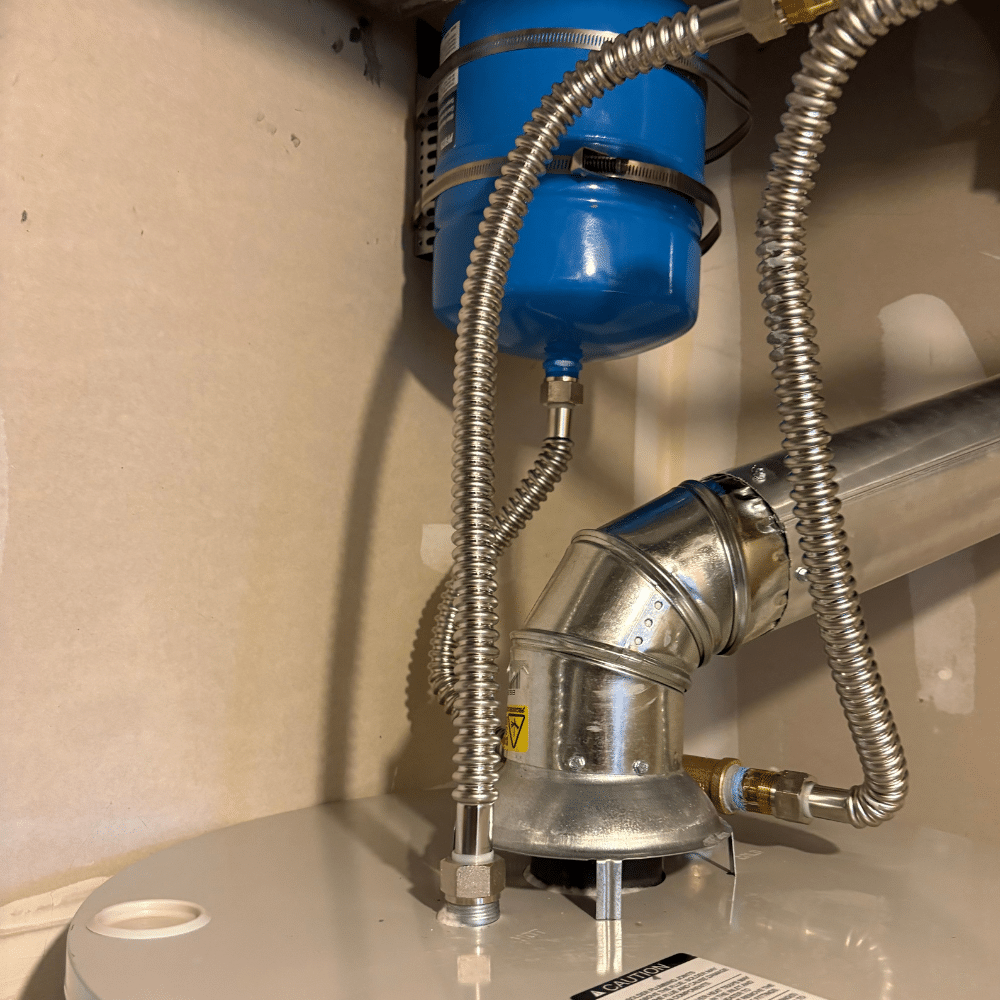
Expansion tank
Heated water expands. This small tank accepts the extra volume by compressing air behind a flexible membrane. Precharge means the air pressure set before water pressure is applied; it is matched to the home’s cold-water pressure.
Gas control valve
This control regulates gas and water temperature. Some models also report diagnostic lights or codes. The estimate should connect replacement to the exact control and test result.
Field note · Millcreek
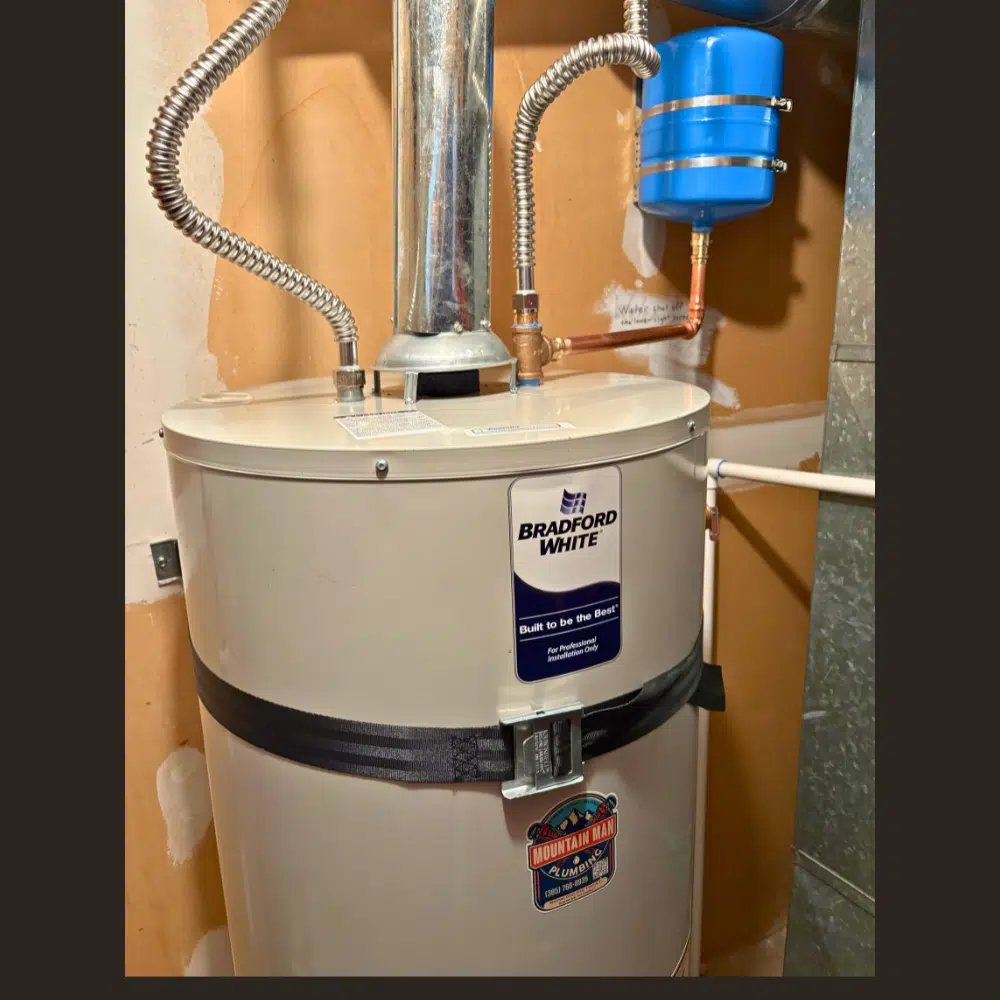
See the connections included in this replacement.
The photo shows the draft hood, vent connector, water lines, and expansion equipment above the tank. If any of those need work, the estimate should name it and explain why.
Before you approve the work
Ask these three questions before you approve the work.
A good plumber should be able to answer each one without hiding behind jargon.
What did you find?
Ask to see the failed part, leak location, test result, or error code behind the recommendation.
Why did it fail?
Pressure, thermal expansion, venting, scale, power problems, and installation conditions can damage the replacement part too.
What is included in this price?
Ask for the equipment model, connection changes, removal, permits, disposal and warranty in writing. You can then compare the actual work included in each price.
From a part name to a reason
Why is this item on the estimate?
| Estimate item | Useful evidence | A missing explanation |
|---|---|---|
| Expansion tank | System is closed; correct size, precharge and support are specified. | “Always required” with no assessment of the system. |
| Relief valve | Valve condition, operating pressure and temperature checked. | Replacing it repeatedly without finding why it opens. |
| Tankless descaling | Water condition, service history and model-approved procedure. | Calling every cold-water complaint “scale.” |
| Venting changes | Exact new appliance, approved material, route and termination assessed. | Assuming the old vent fits because both heaters burn gas. |
| Recirculation | Compatible heater, return path, controls and intended comfort benefit. | “Instant hot water” with no explanation of the remaining pipe distance. |
| Electrical work | Model supply requirements and existing circuit verified. | A spare breaker position treated as proof of available capacity. |
Ask what is included in the finished result.
Ask for the equipment model, labor, removal, permits, connection changes and warranty. The installation also needs startup testing to check leaks, water temperature, controls and the fuel or electrical supply. Those details show what the finished job includes.
What a useful change allowance looks like
It names the uncertain condition, the investigation needed and how additional work is approved. “Anything extra costs more” gives you little to compare. A defined allowance for an inaccessible vent section is a more useful discussion than an unexplained low headline price.
Where these explanations come from
Read the manufacturer and technical references behind this lesson. For service settings, open the manual for your full model number.
Common questions
The questions that make two estimates comparable.
What should a water-heater estimate tell me?
It should name the equipment or failed part, explain the work included, identify anything that could change the price, and state the warranty and next step.
Why is an expansion tank on the estimate?
It gives heated water room to expand in a closed plumbing system. The plumber should connect it to the actual house pressure and piping.
Why does venting change a replacement price?
A gas heater must connect to the right kind of vent. The existing vent size, route, condition, and the new heater all affect how much work is required.
The quote still does not make sense?
Send the estimate. We’ll translate it.
Include the estimate and a photo of the heater label. We’ll explain each item, what supports it, and what the quote still leaves unanswered.


