TEST FIRST
Moen, Delta, Kohler, Pfister, TOTO, American Standard — the actual manufacturer's parts from Utah supply houses, not the off-brand flapper or cartridge that looks similar and fails in eight months.
Immediate Response via Phone or Text.
Water Treatment
Water softener and filtration work available in every Salt Lake County neighborhood below. Same flat-rate pricing, same Expert Plumber on every call, same clean install — wherever you live.
The MMP Method
Every water treatment recommendation starts with knowing what's actually in your water. Hard water mineral content (grains per gallon), iron, chlorine/chloramines, pH, TDS — the right treatment depends entirely on the test result. Salt Lake Valley water varies neighborhood to neighborhood, and "everyone uses a softener" isn't a diagnosis. I test your water before recommending anything.
The water treatment industry runs on commission and high-pressure in-home sales — the "free water test" that always concludes you need an $8,000 system is a real thing in Utah. Mountain Man Plumbing tells you what your water actually needs: sometimes a softener, sometimes whole-home filtration, sometimes just a reverse osmosis under the kitchen sink, sometimes nothing at all. You get the honest answer.
Properly sized equipment from real plumbing supply houses — not pyramid-scheme door-knocker brands with mystery markups. Softeners sized to actual household water use and hardness level (oversized = wasted salt and water; undersized = constant regeneration). Whole-home filtration matched to the contaminants you actually have. RO units that fit your sink cabinet and your daily drinking water needs.
Bypass valve plumbed in, drain line routed to code (with air gap on softeners), brine tank positioned for easy salt fill, electrical and water connections done right. The install is meant to make service and salt refills easy for years, not get the equipment in the door and walk away.
Before I pack up, you get the actual walkthrough: how to add salt, how to set the regeneration schedule, how the bypass works, what the maintenance schedule looks like, when (if ever) to call for service. Nobody hands you a manual and says "good luck" — you'll know how to live with the system.
Verified Feedback
Real Reviews From Our Loyal Customers
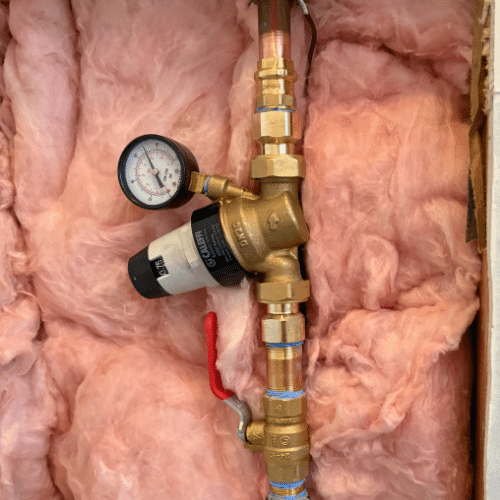
Posted on Google LizTrustindex verifies that the original source of the review is Google. Super helpful and informative. Communicated well and was punctual!Posted on Google NathanTrustindex verifies that the original source of the review is Google. Tyler from Mountain Man Plumbing replaced my in-house main water shutoff valve and the pressure reducing valve (PRV) with a very practical new system that enables me to view the line pressure coming in and any drops in pressure easily. Very good looking workmanship. Prior to the work Tyler came out to my home and provided an estimate on the work, and stuck to the estimate. He's been easy to work with, cleaned up after himself, and also allowed me to change an appointment close to my originally planned estimate appointment over the phone. The website is also easy to use and efficient for scheduling an estimate. Thank you!Posted on Google JeremyTrustindex verifies that the original source of the review is Google. ⭐⭐⭐⭐⭐ I had a great experience with Mountain Man Plumbing. Tyler showed up right on time, was professional, and got everything taken care of faster than expected—finishing the entire job in less than a day. He replaced our water heater, took care of the valves, and installed a new expansion tank, all with great attention to detail. Everything is working perfectly now, and the whole process was smooth and stress-free. Highly recommend Tyler and the team if you’re looking for reliable, efficient plumbing work!
Water Treatment
Choosing the right plumber for water treatment matters — this is the service category with the most aggressive sales tactics in the entire plumbing industry. Door-knockers, "free testing" that conveniently finds problems, financed systems that cost more than a used car. At Mountain Man Plumbing, you're not just hiring a plumber — you're getting reliable, expert service grounded in clear values.
Moen, Delta, Kohler, Pfister, TOTO, American Standard — the actual manufacturer's parts from Utah supply houses, not the off-brand flapper or cartridge that looks similar and fails in eight months.
Properly plumbed bypass, code-compliant drain, accessible for service and salt fills. The install is meant to make the next ten years of ownership easy, not just get the system in the door.
No Pressure, No Pyramid Brands Body: No door-knocker brands with $8,000 systems and 10-year financing. Real equipment from real plumbing supply houses, sized correctly, priced fairly. Sometimes the honest answer is "you don't need anything."
Mountain Man Plumbing
Hard water spots on glass? Soap scum in the shower? Crusty fixtures? Funny-tasting tap water? Door-knocker tried to sell you an $8,000 system? Mountain Man Plumbing makes it easy to get a real test and an honest recommendation.
Questions Homeowners Ask About Our Water Treatment Services
Water treatment covers anything that changes the quality of the water entering your home — water softeners (remove calcium and magnesium hardness), whole-home filtration (chlorine, sediment, taste/odor), reverse osmosis (drinking water purification at the kitchen sink), iron filters, acid neutralizers (rare in Utah), and well water treatment for homes outside city water. Mountain Man Plumbing tests your water first and recommends only what your water actually needs.
Yes — most of the Salt Lake Valley sees water between 10 and 25 grains per gallon (gpg), which is "hard" to "very hard" by industry standards. Anything over 7 gpg is generally considered worth softening. The actual hardness varies by neighborhood and source — Sandy, Draper, and the East Bench tend to run higher than the west side. A test tells you exactly where your address falls.
Depends on the water test, your tolerance for hard water effects, and whether your appliances are showing damage. Spots on dishes, crusty fixtures, dry skin, soap scum that won't rinse, water heater rumbling, and shortened appliance life are all hard water symptoms. If you've got most of those, a softener pays for itself in appliance life and reduced cleaning. If your water's only mildly hard and none of that bothers you, you might not need one.
A real water test covers hardness (grains per gallon), iron, chlorine or chloramines (Utah uses both depending on the supplier), pH, total dissolved solids (TDS), and a few others depending on the situation. Quick tests give a baseline; for well water or unusual situations, lab-grade testing is available. The test happens before any recommendation — not after the recommendation, like the door-knocker version.
A water softener removes calcium and magnesium (the minerals that cause "hardness") through ion exchange — it replaces those minerals with sodium, then regenerates periodically using salt. A filter removes other things — chlorine, sediment, iron, taste/odor compounds — using different media (carbon, sediment cartridges, KDF, etc.). They solve different problems and most homes that need treatment need both, sized appropriately.
Yes — after the water test. Quoting a softener without knowing the hardness, iron content, and household water use is the door-knocker move. Real quotes come from real numbers: your gpg hardness, your household size, your peak flow rate, and what your existing plumbing space allows. Send a few photos of where the softener would go and ask for the test, and a real conversation can start.
That's the going rate for the pyramid-scheme water treatment brands that knock doors in Utah neighborhoods. The same physical equipment is available at a fraction of the cost from real plumbing supply houses. The door-knocker model relies on in-home pressure tactics, financed monthly payments that hide the total cost, and "lifetime warranties" that disappear when the company rebrands. A real plumber with a real supplier can put a properly-sized softener in your home for a lot less. Get a second opinion before signing.
Industry-standard brands from real plumbing supply houses include Clack, Fleck, Autotrol, GE/Whirlpool consumer units, and a handful of others. The brand matters less than the valve — the control valve is what determines how the softener regenerates and how long it lasts. Mountain Man Plumbing installs equipment with real valves and real warranties, not house-brand black-box units from door-knocker companies.
An RO system is a multi-stage drinking water purifier that installs under the kitchen sink and feeds a dedicated faucet (and optionally the fridge water line). It removes most dissolved solids, lead, fluoride, chlorine, taste/odor, and many other contaminants down to molecular size. RO is the gold standard for drinking water — it's a separate decision from softening, and many homes have both: softener at the main line, RO at the kitchen sink.
Often, yes, if you want both soft water for the whole house AND clean drinking water at the kitchen sink. Softeners remove hardness but don't address chlorine, taste, or contaminants. RO removes those things but only at one sink. Many Utah homes benefit from running both — Mountain Man Plumbing will tell you straight whether your water and your goals justify both, or just one, or neither.
Whole-home filtration sits between your main water line and the rest of the house, removing chlorine, chloramines, sediment, taste/odor, and (with the right media) some heavier contaminants. Good fit for homes on chlorinated city water where the goal is filtered water everywhere — shower, laundry, kitchen, ice maker. Sized correctly so flow rate isn't choked.
Depends on hardness, household size, and how the system is set. A properly sized softener for a typical 2-4 person Salt Lake home runs through a 40-pound bag of salt every 4-8 weeks at typical settings. Oversized softeners waste salt; undersized ones run out of capacity and don't actually soften. Right-sizing matters.
Costco, Home Depot, Lowe's, Walmart, and most hardware stores carry softener salt. Standard solar pellets work for most systems; some systems prefer evaporated or "crystal" salt. Mountain Man Plumbing will tell you what works best with the unit you have. Avoid rock salt unless your manual specifically allows it — it's dirtier and leaves residue in the brine tank.
Salt is the main ongoing cost — typically $10-30/month depending on household size and hardness. There's a small water cost for regeneration cycles (which run at night and don't affect daily use). Electricity is negligible. Compared to the appliance damage, fixture cleaning, water heater scale, and water heater lifespan effects of unsoftened water, a softener is usually net cost-saving over its lifespan.
Probably yes. The rumbling/popping sound is steam bubbling up through the sediment layer that hard water leaves at the bottom of the tank. A softener slows future sediment buildup; flushing the tank addresses what's already there. If your tank is heavily scaled, both are worth doing — flush the tank now, install the softener to prevent it from happening again.
Yes. Soft water rinses soap differently than hard water — many people describe it as "slippery" the first few weeks. Most adjust quickly and notice less soap scum, easier shampooing, less dry skin, and softer laundry. Some people prefer the feel of hard water (rare) — but if soft water bothers you, the bypass valve lets you switch back temporarily.
Mechanically, yes — most softeners come with installation kits. Where DIY installs go wrong: improperly sized for the home, wrong programming for local water, no bypass valve installed, drain line not run to code (air gap required), and skipping the actual water test so the unit is configured wrong from day one. A real install from someone who tests the water first costs less than fixing a wrong DIY job 18 months later.
Yes, with honest expectations set. Salt-free conditioners (template-assisted crystallization / TAC systems) don't actually remove hardness — they change the structure of mineral crystals so they're less likely to stick to surfaces. They reduce scale but don't produce the "soft water feel" people associate with traditional softeners, and they don't help with soap scum, laundry, or appliance interior buildup the same way. Useful in some scenarios (no drain access, sodium-restricted households), oversold in most.
Honest answer: independent testing has not consistently shown these devices to work. They sell because they're cheap and easy to install. If you're convinced you want one, fine — but Mountain Man Plumbing won't recommend or install one as a water treatment solution.
Yes. Well water typically needs a different approach — iron filtration, sediment filtration, sometimes pH adjustment or acid neutralization, sometimes UV sterilization for bacteria. Well water testing is more involved (lab testing recommended) and the right system depends entirely on what the test shows. Mountain Man Plumbing handles well water treatment for homes outside city water service.
Yes, especially if you only want clean drinking water at the kitchen sink and aren't bothered by hard water elsewhere. RO membranes do work harder on hard water and need replacement more often, but it's a reasonable approach for people who want a low-cost, low-commitment water improvement.
A well-installed, properly-sized water softener with regular salt and reasonable water quality lasts 10-15 years on the resin and tank, with the control valve sometimes needing service or replacement at the 7-10 year mark. RO systems run 5-10 years on the membrane (replaced periodically) and longer on the housing. Whole-home filter cartridges get replaced on a 6-12 month cycle depending on media and usage.
Yes — and this is the service category where second opinions matter most. Door-knocker brands count on customers signing same-day under pressure. If you've been quoted anything water-treatment related and want a real plumber to review it before you commit, send the quote and a photo of where the system would go. The review takes 10 minutes and could save thousands.
Clear access to where the system would go — typically a basement utility area, garage, or mechanical closet near where the main water line comes into the house. Know roughly where your main shutoff is, and have any prior water test results or water-bill info handy if you've got them.
Yes. Mountain Man Plumbing will identify your main shutoff, label it, and walk you through how to use it during the install visit.
Yes — fully licensed and insured. Master Plumber License #12992295-5501. Homeowners who want to verify can use the public lookup at the Utah Division of Professional Licensing.
Mountain Man Plumbing serves Sandy, Draper, South Jordan, West Jordan, West Valley City, Murray, Cottonwood Heights, Millcreek, Taylorsville, Herriman, Riverton, Holladay, Midvale, and the broader Salt Lake County area. We also handle Park City (Summit County), Alta, and Lehi (Utah County).
This is the plumbing category where "the difference" matters most. The door-knocker and pyramid-scheme water treatment brands run on high-pressure in-home sales, financed payment plans that hide the total cost, and "free water tests" that always conveniently find a problem. Mountain Man Plumbing tests the water first, recommends only what your water actually needs, prices the work plainly, and installs real equipment from real plumbing supply houses. You get a Master Plumber on every call, not a commissioned salesperson with a script.