
Pump repair, replacement & troubleshooting
Residential
pump service.
A rising pit. A sewage alarm. A long wait for hot water. We service the pumps and connections that move water through your home, and explain what needs attention before the work starts.
Long story short
We service sump pumps, sewage ejectors and hot-water recirculation pumps, along with their controls and connections. A rising pit, an alarm or a pump that won't run needs attention. Tell us which system you have and what's happening.
Jump to: What is the pump doing · Which pump is in your home · Watch the water. Understand the cycle · Why does it start so often
Skip the read? Book a visit or text (385) 766-8935.
Start with what you noticed
What is the
pump doing?
The sound, water level and timing help us choose the first check. Open the closest description below.
The pump stays silent
Start with the water level: a low basin may simply have no reason to run. If the level is high, we check the power supply, switch and motor in that order.
Helpful to tell us: Tell us whether the alarm is sounding and whether power was recently lost. Stay out of standing water around electrical equipment.
It runs, but water keeps rising
We check whether water can enter the pump and leave through the discharge. A blocked inlet, air trapped in the pump, restricted pipe or faulty check valve can interrupt that path.
Helpful to tell us: Describe the sound and how the level changes. Stop using connected fixtures if wastewater is collecting in the basin.
It starts every few seconds
A float with little operating range or water returning through the discharge can refill the basin quickly. We watch where the returning water enters and measure a complete start-and-stop cycle.
Helpful to tell us: Record a short video from a dry location with the cover left in place. Include the sound just after the motor stops.
There’s a sewage smell
We inspect the lid gasket, cord seals, pipe connections and vent route. A dry fixture trap nearby can also let sewer gas into the room, so we trace where the odor is strongest.
Helpful to tell us: Leave the sewage basin sealed and tell us whether the smell follows fixture use or pump operation.
Hot water takes too long
We check whether the heater makes hot water, then follow the circulation loop. The timer, temperature control, pump and return valve determine when cooled water gets moved back.
Helpful to tell us: Tell us which fixtures are affected, when you notice the wait and whether the controls or heater were recently changed.
Follow the water
Which pump
is in your home?
Find what enters the pump and where the pipe goes. That tells you what the system is there to do.
01 / Groundwater / basement or crawl space
Sump pump
Moves collected groundwater out of a basin and away from the house.
How to recognize it: Look for a covered pit near the foundation, a pump cord and a pipe leaving the pit. Drainage pipes may bring water into its side.
Water can collect around a foundation and flow into the basin through a drainage system. As the level rises, a float starts the pump. The outlet needs a clear route to the approved discharge location, where the water can drain away.
During service we follow the water all the way to the outlet. An icy termination or water draining back toward the foundation can undo what a working pump is trying to accomplish.
Read more: Zoeller sump pump anatomy ↗ · Zoeller basin arrangement ↗ · Zoeller troubleshooting ↗
Explore this pump system in 3D →02 / Wastewater / fixtures below the sewer connection
Sewage ejector
Lifts wastewater from a lower bathroom or laundry to a higher drain.
How to recognize it: A sealed basin receives a drain from the fixtures. Two pipes commonly leave the lid: a pumped discharge and a plumbing vent.
The fixtures drain downhill into the basin. The pump then lifts that wastewater to a connection where gravity can carry it onward. A sealed lid contains wastewater and odors, while the vent lets air move as the liquid level changes.
The discharge has a check valve and a service shutoff. Their order and access matter when the pump needs removal. Leave the basin closed if an alarm sounds and stop using the fixtures that feed it.
Read more: Liberty sewage-pump manual ↗
Explore this pump system in 3D →03 / Comfort / the wait at the faucet
Hot-water recirculation
Moves cooled water back toward the heater so hot water reaches the taps sooner.
How to recognize it: A small pump sits near the water heater or within an approved retrofit system. Its operation may follow a timer, temperature sensor or demand control.
A dedicated return pipe completes a loop from the far end of the hot-water line back to the heater. Some retrofit systems use a valve near a distant fixture to return cooled water through the cold-water line.
We check the pump, controls, check valves and return route together. A changed timer, failed crossover valve or closed isolation valve can bring the long wait back. The heater still has to produce the hot water.
Read more: Grundfos circulation controls ↗ · Grundfos return-path options ↗
Explore water heaters and hot-water problems →Inside the basin / Explore in 3D
Watch the water.
Understand the cycle.
Select a system, follow a pumping cycle and inspect the named parts. The model opens the basin so you can see the float and pump working together.
Loading the pump cutaway. The cycle and part explanations are available below.
The basin gives incoming water somewhere to collect.
The water level rises toward the float’s start point. The pump stays off during this part of the cycle.
The float starts the motor and the level falls.
Water travels through the pump, up the discharge and past the open check valve. The operating float follows the falling level.
The check valve holds the upper water column.
At the lower stop point, the float turns the pump off. The check valve closes. Water beneath that valve can settle back toward the basin.
Returned water can trigger another short cycle.
In this example the motor is off, but water leaks back through the check valve. Watch the basin rise again. Compare this with fresh water arriving through the inlet.
The water has risen above the normal start level.
Here the pump has failed to start and the higher alarm sensor is reached. An alarm can also occur when inflow exceeds pumping capacity. Stop fixture use if this is a sewage basin.
Collection basin
The basin holds incoming water between pumping cycles. Its inlet sits below the floor so the supply can drain into it.
The front of this teaching model is cut away to expose the pump and water level. A real sewage basin has a sealed cover.
Read more: Zoeller basin arrangement ↗ · Zoeller sewage basin details ↗
Float switch
The float rises with the water and switches the motor on. It switches off at a lower level, leaving water around the pump.
Clearance around the float lets it travel without hitting the wall, pipe or power cord. Select the cycle stages to follow its movement.
Read more: Zoeller sump pump anatomy ↗
Pump & motor
Inside the lower housing, a spinning impeller gives water the energy to enter the discharge pipe. The motor above it drives the shaft.
The sump view shows a compact pump with a vertical float. The sewage view uses a larger solids-handling body and a tethered float.
Read more: Zoeller sump pump anatomy ↗ · Liberty sewage-pump manual ↗
Service union
This removable pipe joint lets a technician disconnect the discharge for pump service.
It sits above the basin cover, with room to reach it. The pipe above has its own support.
Read more: Liberty sewage-pump manual ↗
Check valve
Water opens the valve on its way up. After the motor stops, the valve closes to hold the water in the pipe above it.
Try the return-water example. A leaking check valve sends water back into the basin and can make the pump repeat the same work.
Read more: Liberty check-valve assemblies ↗ · Zoeller troubleshooting ↗
Ball shutoff valve
The lever turns a ball inside the valve through a quarter turn. Its open passage lines up with the pipe when the handle runs along the pipe.
Above the sewage check valve, this service shutoff isolates the upper discharge piping for pump maintenance. The model shows it open.
Read more: NIBCO full-port ball valve ↗ · Liberty sewage-pump manual ↗
Discharge route
This pipe carries pumped water to its destination. The pump has to overcome the lift and the resistance through pipe and fittings.
The sump route leaves toward an outdoor discharge. The sewage route joins a higher building drain. Follow the arrows to see the direction.
Read more: Liberty pump-curve guide ↗
Sewage basin vent
This pipe lets air enter and leave the sewage basin as wastewater is pumped out or drains in.
Select Sewage ejector to reveal its vent connection. Use Close cutaway to see the covered assembly. The vent continues into the building’s vent system.
Read more: Zoeller sewage basin details ↗
High-water alarm
A separate level sensor signals when water rises above the normal operating range, giving you a chance to respond before an overflow.
The alarm sensor sits higher than the operating float. Its warning needs to reach someone who can act, including when the home is empty.
Read more: Liberty alarm operation ↗
About these assemblies
The sump pump has a compact cast body and an integral float linkage. The sewage pump has a taller motor, a larger discharge opening and a tethered float. Their shapes follow the Zoeller M53 and Liberty LE50 product references.
Choose Inspect pump for the housing and float, or Whole system for the basin and pipework. The sewage assembly adds a sealed cover, separate vent and service shutoff. Open the check-valve view to watch its flap through the cycle. Pipe routes are shortened to fit the viewer.
A useful bit of pump math
Why does it
start so often?
The space between the start and stop levels holds the water moved during a cycle. A narrow range fills quickly. Water leaking back through a check valve can fill that space again after shutdown.
Try a round basin
Change the inside diameter and the distance between its two operating levels. Watch how much water fits in that band.
Gross volume between the two levels
US gallonsAt the chosen inflow, that space fills in about seconds while the pump is off.
The pump and pipes take up some of that space. Actual float settings come from the installed equipment’s instructions.
See the calculation
Round-basin volume = π × (inside diameter ÷ 2)² × operating-level difference ÷ 231. Dimensions are in inches, and 231 cubic inches equals one US gallon. Fill time in seconds = gallons ÷ incoming gallons per minute × 60.
This calculates the space filled while the pump is off. It leaves out the volume occupied by equipment and assumes steady inflow. Pump selection also needs the required flow and the resistance of the discharge route.
Read the pump’s curve
A performance curve shows a pump’s flow at different amounts of head. Head expresses the energy needed to move water as an equivalent height of water. For a basin pump, total head adds the vertical lift to friction losses in the pipe and fittings. Find that head on the curve to read how much water the pump delivers.
The maximum lift printed on a box is the point where flow falls to zero. We need useful flow at your operating conditions.
Read more: Liberty pump-curve guide ↗
Look for returning water
If the basin rises just after the motor stops, trace whether that water comes through the inlet or back down the discharge. That observation separates new water arriving from water the pump already moved.
Frequent starts also call for checking float travel and the available basin volume. Changing the float without the model’s required stop level can leave too little water around the pump.
Read more: Zoeller troubleshooting ↗
Prepare before the next outage
Backup pumping.
A warning you can hear.
A backup plan should cover the failure you are worried about: lost electrical power, a failed primary pump or more incoming water than one pump can handle.
A second pumping path
A battery-backup sump system adds a pump, float, battery and charger. Its output must suit the lift. Discharge connections need to keep one pump from pushing water back through the other.
Read more: Liberty battery-backup manual ↗
A working battery
Battery condition and pumping time affect how long protection lasts. Service includes the charging system and a test of the backup pump itself. A battery-powered alarm may only power the warning.
Read more: Liberty battery-backup manual ↗ · Liberty alarm operation ↗
Someone gets the alert
A high-water alarm signals above the normal range. Test whether it can be heard where people spend time. Remote alerts also need a working communication path and someone ready to respond.
Read more: Liberty alarm operation ↗
What happens on the visit
Trace the problem.
Check the finished repair.
We inspect the complete pumping path, explain the findings and price the work. A sound motor with a failed switch calls for a different repair than a damaged pump or an obstructed discharge.
Identify the equipment
Read the label, identify the liquid being pumped and check the basin or return-pipe arrangement. Note the symptoms and when they began.
Check the controls and connections
Inspect the power supply, switch travel, valves, seals and accessible pipe route. Test the components that fit the complaint.
Explain the repair options
Discuss the failed part, pump condition, replacement availability and access. If the basin or pipe arrangement needs correction, include that work in the estimate.
Run and observe the system
Check starting, water movement, stopping and leaks. Where fitted, test the alarm and backup separately. For hot-water circulation, check the controls and delivery at the affected taps.
What changes the price?
Reaching a pump in an accessible basin is different work from repairing buried discharge piping or opening finished walls for a return line. The pump model, liquid handled, valves, wiring condition and cleanup also affect the job. Photos of the full setup help us plan the visit.
Recent and Related Plumbing Work


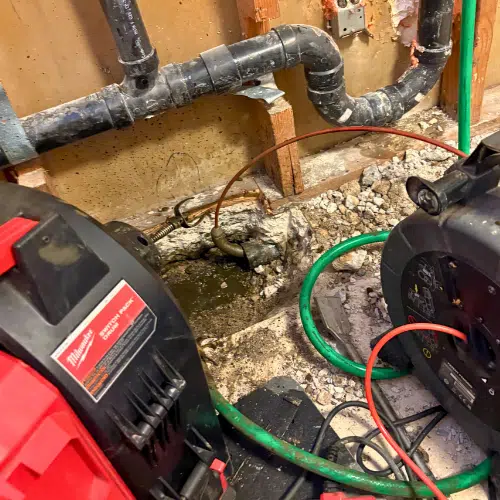
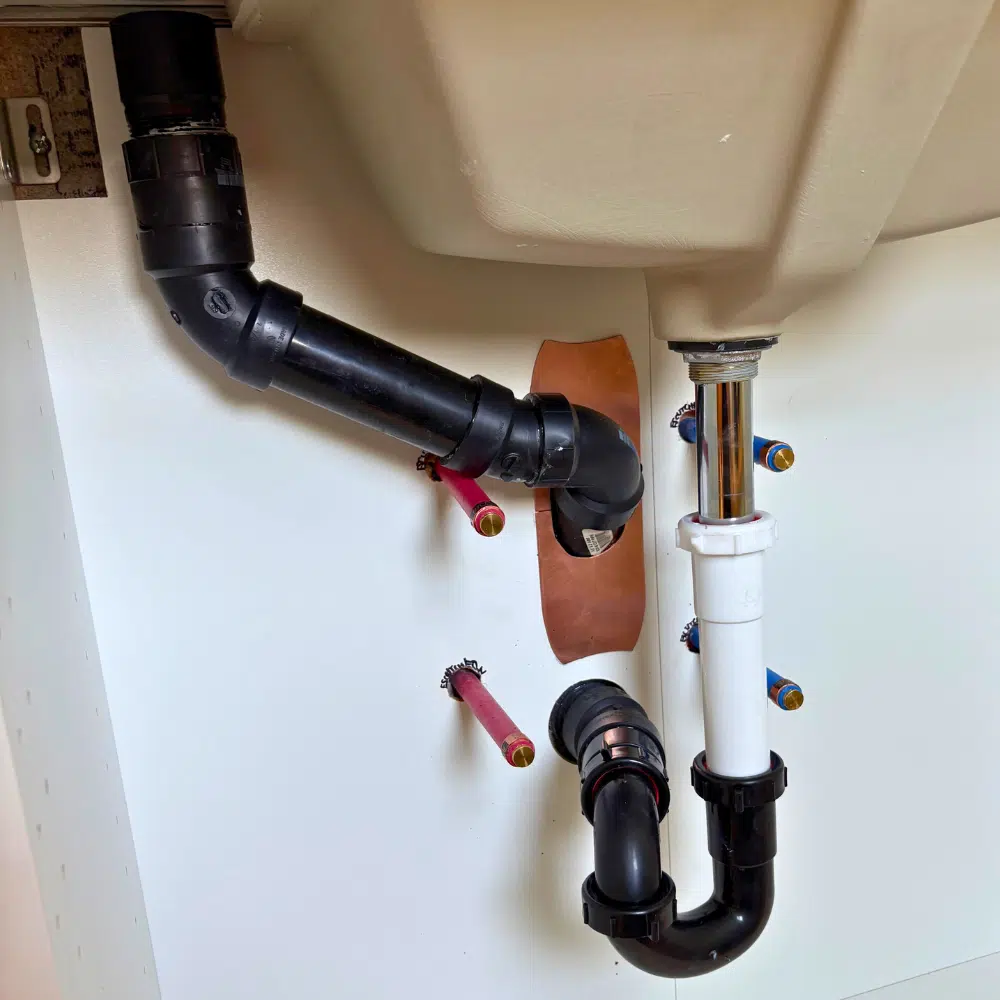
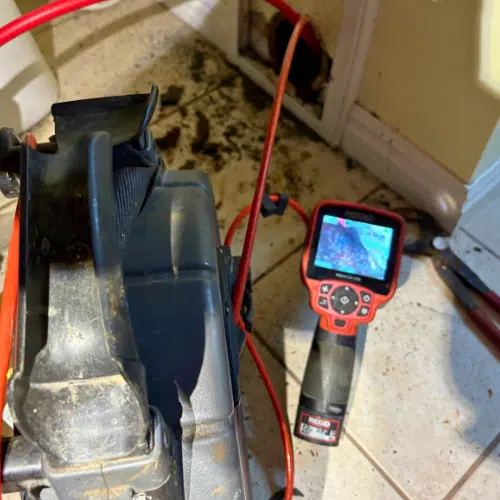
Questions from around the house
Before the next pump starts.
Does a louder pump mean it needs replacement?
The sound helps narrow the inspection. A knock at shutdown points toward the check valve or unsupported pipe, while grinding or a persistent hum draws attention to the pump. We check water movement and operating current alongside the sound before recommending a repair.
Should I buy a replacement with the same horsepower?
Bring the exact model number and photos of its connections. Horsepower describes the motor, while the pump’s performance curve shows how much water it can move against the lift and pipe resistance. The replacement also needs the right solids handling, electrical supply and controls.
Is a sewage ejector a grinder pump?
An ejector passes wastewater and permitted solids through its pumping passages. A grinder uses a cutting mechanism before pumping. The drain arrangement and required pumping performance determine which equipment fits. Keep wipes, rags and other trash out of either system.
Will a battery alarm keep the pump working during an outage?
A battery in an alarm can keep the warning active. Running the pump requires its own suitable power source or a separate backup pump system. Check the labels on the alarm, pump and backup equipment so you know what stays working when power fails.
Why can the cold tap feel warm with a circulation system?
Some retrofit systems temporarily use the cold-water pipe to return cooled water toward the heater. That can leave warmer water in the cold line. The crossover valve and its controls affect how long this lasts. A dedicated return uses a separate pipe for the circulation loop.
Can you repair the switch or valve without replacing everything?
Often the useful repair is a switch, check valve, connection or control. We also check the pump’s condition and whether its output still fits the system. Access, parts availability and the cost of restoring reliable operation help decide whether repair or replacement makes sense.
What should I send before a pump-service visit?
Send a wide photo of the setup and a readable model label if it is accessible. Describe the water level, sound, alarm and timing. For a sewage system, tell us which fixtures feed it. For circulation, tell us which taps wait longest and how the pump is controlled.
Keep learning
The reference shelf.
The equipment makers below explain the components, pumping limits and service details used in this guide.
- Zoeller Model M53: float, motor, impeller and discharge ↗
- Zoeller Model 900: basin, cover, inlet and air relief ↗
- Liberty LE/LEH installation manual: basin sealing, venting, piping and service ↗
- Zoeller 912 sewage package: sealed cover, cord seal and vent connection ↗
- Zoeller product support: switches, air relief and troubleshooting ↗
- Liberty pump FAQ: head, performance curves and alarms ↗
- Liberty 441 battery-backup system: primary and backup discharge arrangements ↗
- Liberty ProVore duplex controls: high-water alarm and backup power ↗
- Grundfos COMFORT TDT: dedicated return, timer and temperature control ↗
- Grundfos residential hot-water recirculation: dedicated returns and retrofit systems ↗
- Liberty CV150/CV200: ABS check body and flexible clamp connections ↗
- NIBCO T-585-66-LF: two-piece bronze body and quarter-turn lever ↗
Public data and update record
Maintained by Mountain Man Plumbing. Guide version 2026.09.09.2. References checked 2026-09-09.
A photo is a useful start
Show us the setup.
Tell us what the pump is doing and send a photo of its label and connections from a dry, accessible spot. We’ll help plan the next step.
The price, in plain terms
What does the
price cover?
- Name the work.What's being repaired or installed, and what stays.
- Check what's included.Parts, labor, access, cleanup and any required permit.
- Settle the open questions.Extra work, exclusions and the warranty for this job.
A quote for pump work should make the scope clear. Check who handles access and patching, whether any further diagnosis costs extra, and what happens if opening things up reveals more damage.
Found a lower number? Ask us why ours is different. Bring both descriptions of the work. Compare the equipment, repair scope and exclusions before deciding what the difference buys. A higher price alone doesn't prove a better job.
- What sump pump work costs in Utah What changes the cost and what to ask before agreeing. On Utah Plumbing Prices, which we publish.
- Already have a quote? Check it Use our second-opinion tool to work through the job and the price you've been given.
- How plumbing pricing works Flat rate, hourly, dispatch fees, permits: what each one means for what you pay.
From our local guides
Older homes. New plumbing projects.
Our county-record analysis shows when the neighborhoods were built. The repair guides explain the fixtures, pipes and remodel work.


