
A LITTLE WATER. A LOT OF QUESTIONS.
LEAKS
LEAVE CLUES.
WE FOLLOW THEM.
The puddle is the beginning of the story. We find where the water starts, explain the repair, and help you get your home back.
Visible pipes. Hidden leaks. Fixture connections.
Clear answers before the repair.
Long story short
We track down plumbing leaks and repair the pipe, valve or connection causing them. Water under a sink, behind a wall or on the ceiling—tell us where you're seeing it. We'll explain the repair and any access it needs.
Jump to: Water spreading right now · Where is it wet? When does it happen · One house. A lot of places to leak · Find the cause. Then choose the fix
Skip the read? Book a visit or text (385) 766-8935.
Where is it wet?
When does it happen?
The timing helps us follow the water. A supply leak may continue between uses, while a drain or enclosure leak usually appears when that fixture runs.
Answer from what you have already noticed. Leave a leaking fixture off while waiting for repair.
YOUR NEXT USEFUL STEP
Start with the wet spot.
Choose the area and timing. We’ll explain the possibilities, what to avoid and where to look in the model.
Water actively spreading? Use the call option above.
Explore this part of the house ↗Book help with this leakOne house.
A lot of places to leak.
Pick an area and inspect its plumbing. See what can leak, when you might notice it, and how we distinguish the possible causes.
IN THIS EXAMPLEShower supply connection
Opening the house cutaway…
Choose a source in the list.
CHOOSE AN AREA
The small orange dot marks the connection described above. Copper-colored supply lines are hot; blue supply lines are cold. The toilet connects only to cold water; drain pipes are pale and dry vents are sage green.
UPSTAIRS / PRESSURIZED SUPPLY
The wet spot can be downstream of the leak.
Damp drywall, a ceiling stain or the sound of water when the fixtures are off.
A leaking supply connection can keep releasing water while the system is pressurized—even with the faucet off.
HOW WE NARROW IT DOWN
Compare the leak’s timing with water use, then trace moisture toward the source. Controlled isolation helps narrow the pipe or fixture involved before access is opened.
WHAT THE REPAIR MAY INVOLVE
Repair the confirmed pipe or connection, check support and nearby damage, then test before the opening is closed.
How leaks are located ↗Avoid the wet area. If water is actively spreading and the house shutoff is safely accessible, close it. Do not force a stuck valve.
Get help hereExplore the supply lines, individually vented fixtures and sloping building drain. The cutaway exposes connections normally hidden by walls and floors. Repair planning uses the measurements and access in your home.
Why those vents matter. Each trap holds a water seal. The vent lets air move so draining water does not siphon that seal away. Select Drains & vents to see the trap arms, separate vent risers and downstream-facing connections. ICC’s illustrated venting guide ↗
Read all 10 leak explanations without using the model
Inside a wall
A leaking supply connection can keep releasing water while the system is pressurized—even with the faucet off.
Compare the leak’s timing with water use, then trace moisture toward the source. Controlled isolation helps narrow the pipe or fixture involved before access is opened.
How leaks are located ↗Toilet & floor
This example shows a seal/flange leak during flushing. A supply or tank leak can appear at other times; tank-to-bowl leakage may leave no puddle.
Inspect the supply and tank first. Where indicated, remove the toilet to examine the seal, flange and floor support. A tank dye test checks a different, internal leak.
Toilet repair ↗Tub & shower
This example starts only when a high bath reaches the overflow. A drain shoe, valve, shower arm or enclosure can produce similar evidence under different conditions.
The plumber checks the supply, drain, overflow and enclosure one at a time. Watching which check produces water below locates the escape path.
Bathroom fixture repairs ↗Bathroom sink
A trap or drain joint usually leaks as the sink empties. Supply hoses and shutoffs remain under pressure when the tap is closed.
Dry accessible surfaces, then isolate supply, faucet, drain and sink-seal sources. Water on the trap may have dripped from above.
Inside a faucet & sink ↗Kitchen & disposal
Watch whether it follows faucet use, draining, disposal operation or a dishwasher cycle. A pressurized connection can leak between uses.
Trace the wet point from the faucet and basket through the disposal, trap and dishwasher hose. The source determines which connection needs repair.
Garbage disposal help ↗Laundry & hoses
The example is an inlet-hose connection under pressure. Water during pump-out may instead involve the drain hose or an overflowing standpipe.
Match the leak to the cycle. Filling directs attention to the inlet hoses and valves, while discharge directs attention to the drain hose and standpipe.
Laundry plumbing ↗Water heater
The cold inlet on this electric tank is leaking. Water runs down the jacket from that fitting and collects at the base.
Trace wet connections back toward the source. Check inlet/outlet fittings, pressure and expansion conditions, drain valve, relief outlet and tank separately.
Water heater guide & cutaway ↗Main shutoff & PRV
Supply-side faults can leak with every fixture off. Measure pressure and inspect the affected connections to guide the repair.
Inspect the valve body, handle stem and pipe connections. Pressure readings before and during water heating can reveal excess supply pressure or expansion.
Pressure regulator help ↗Slab & buried lines
A buried supply leak may run continuously. Irrigation, groundwater and a drain fault can create other wet-area patterns.
Meter checks, isolation, pressure observations and location tools help distinguish the house supply, service line and other sources.
Water service line help ↗Outdoor faucet
A split frost-resistant faucet barrel may leak inside the wall only during use. Stem, seat and vacuum-breaker faults behave differently.
Check the stem, outlet, vacuum breaker, body and indoor connection. Confirm the barrel length and connection before replacement.
Outdoor faucet help ↗Find the cause.
Then choose the fix.
See how moisture readings, isolation and inspection help trace water through a home. Choose a tool below to learn what it measures.

WHERE IS IT WET?
Moisture mapping
Checks accessible surfaces to map moisture and narrow the affected area. Comparing readings helps guide the next inspection.
How to interpret itCompare readings on similar materials and follow the moisture pattern to the next inspection point.
FLIR: confirming moisture patterns ↗Quiet house.
Moving meter?
First account for toilets, irrigation, ice makers, softener cycles and other automatic uses. If you have a safely readable customer meter or utility display, compare readings during a period with all water use stopped.
EPA suggests comparing meter readings during two hours with all water use stopped. Movement during that interval means water passed through the meter. For an active leak, call for help promptly and close a safely accessible working shutoff.
EPA’s household leak checks ↗Found it.
Put it right.
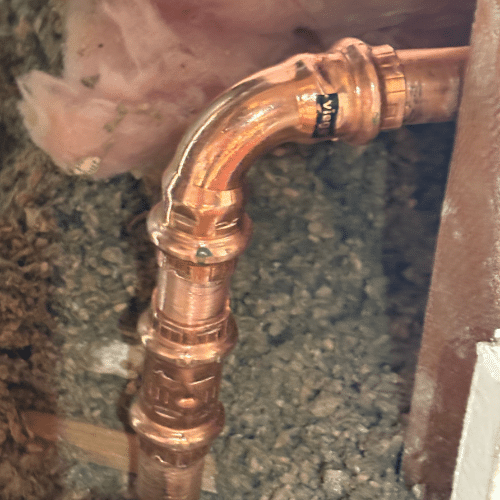
Explore local leak repairs, valve replacements and the connections behind the finished wall. These are projects from our past-work feed.
Recent Leak Repair Jobs


Sometimes a connection.
Sometimes a bigger conversation.
LOCAL LEAK REPAIR / FIND YOUR CITY
Leak repair in Sandy & across the valley.
Based in Sandy, we help homeowners across the Salt Lake Valley and nearby communities. Choose your city for local plumbing information and completed work.
References behind this guide
- ICC: individual fixture venting principles
- Charlotte Pipe: DWV fitting patterns
- EPA WaterSense: meter checks and common household leaks
- Fluke: thermal imaging and moisture investigation
- Copper Development Association: corrosion and installation factors
- Woodford: frost-resistant faucet troubleshooting
- SharkBite: listed applications and installation requirements
- Utah Insurance Department: home claims information
- Red Cross: water and electrical hazards
- Utah DOPL: verify a license
LOCAL PEOPLE / OUR SANDY OFFICE
Right here.
Close to home.
Mountain Man Plumbing
688 East Union Square, Suite 204Sandy, UT 84070
Serving homes across the Salt Lake Valley.
Open our Google profile ↗The price, in plain terms
What does the
price cover?
- Name the work.What's being repaired or installed, and what stays.
- Check what's included.Parts, labor, access, cleanup and any required permit.
- Settle the open questions.Extra work, exclusions and the warranty for this job.
A quote for leak repair should make the scope clear. Check who handles access and patching, whether any further diagnosis costs extra, and what happens if opening things up reveals more damage.
Found a lower number? Ask us why ours is different. Bring both descriptions of the work. Compare the equipment, repair scope and exclusions before deciding what the difference buys. A higher price alone doesn't prove a better job.
- What leak repairs cost in Utah What changes the cost and what to ask before agreeing. On Utah Plumbing Prices, which we publish.
- Already have a quote? Check it Use our second-opinion tool to work through the job and the price you've been given.
- How plumbing pricing works Flat rate, hourly, dispatch fees, permits: what each one means for what you pay.
From our local guides
Older homes. New plumbing projects.
Our county-record analysis shows when the neighborhoods were built. The repair guides explain the fixtures, pipes and remodel work.


