The drain beyond the house
Sewer &
underground
drain repair.
A sewer problem can start beneath the basement and continue all the way to the street. Follow the pipe, understand what the camera finds, and see how the repair reaches it.
Explore the underground route ↓Long story short
Need a buried sewer line inspected or repaired? We refer sewer and underground drain work to Bumble Bee Plumbing, whose team handles the inspection, quote and repair directly. Below you can see what the work involves before arranging that visit.
Jump to: One connected way out · Read the finding. Understand the fix · The pipes you may find · What the work involves
Skip the read? Book a visit or text (385) 766-8935.
Basement · Yard · Street
One connected
way out.
Gravity carries wastewater toward the public sewer. Select a part to see where it sits and what changes when that section needs repair.
The curved saddle covers the opening; its branch socket receives the house pipe.
Loading the underground cutaway…
Whole routeHouse drain → yard lateral → public sewer. Drag to rotate; select a named part.
01 / Building drain
Under the basement
Bathroom and laundry branches join the building drain below the slab. This larger pipe collects wastewater and carries it toward the foundation. The vertical drain stack brings in water from the floors above.
A repair here starts by locating the pipe beneath the concrete. Its depth and branch connections determine the floor opening. Bedding—the prepared material under and around the pipe—supports the rebuilt drain. Its slope carries wastewater toward the outlet.
02 / The house outlet
Through the foundation
The drain leaves the building through a protected foundation opening. Outside, it continues as the sewer lateral—the pipe serving this property.
The house outlet elevation sets the starting height for the yard run. A basement that sits below the receiving sewer may need a sewage ejector to lift wastewater to it.
03 / Entry for the camera and cable
Cleanout access
A cleanout is a capped access opening connected to the sewer. Its fitting guides cleaning and inspection equipment into the buried line. The model shows an outdoor cleanout aimed downstream.
Crews need access that fits the direction and size of their equipment. A buried, damaged or poorly placed cleanout can become part of the repair. Keep its cover accessible after landscaping.
04 / Private sewer lateral
Across the yard
Wastewater runs downhill through the lateral toward the public sewer. Roots, separated joints, broken pipe and settled sections can interrupt that path.
The camera shows the inside. A small transmitter near its head sends a signal that a receiver above ground can locate. This connects a defect on the recording to a marked spot in the yard or floor.
05 / Where the two systems join
Connection to the main
The house pipe joins an opening in the public main. This model shows a tap saddle: a shaped connector sitting over a cored hole, held around the main by stainless bands. Its branch socket receives the lateral.
Use “Show opening in main” to remove the connector and see the hole through the pipe wall. In the assembled view, the saddle covers that opening and the lateral points wastewater into the main.
A built-in wye
The branch is formed into a section of sewer main. The lateral joins its socket. Installing a new wye in an existing main means opening that section of the main and connecting the fitting at both ends.
A tap on an existing main
A cored opening passes through the main’s wall. A saddle or another purpose-made connector fits that opening and receives the house pipe. The model shows the saddle, its curved sealing apron and the bands holding it around the main.
A clear passage into the main
The connection leaves the main’s passage open for wastewater from upstream homes. The branch pipe seats in its fitting; its end belongs at the connection, clear of the flow channel. The sewer provider sets the connection type used on its main.
Fernco · How a sewer tap saddle connects to a main ↗ · Fernco · Saddle connections and built-in pipe junctions ↗
06 / The neighborhood sewer
Public sewer main
The main receives wastewater from multiple properties and carries it through the collection system toward treatment. A blockage here can affect several homes.
Report an overflowing manhole or a suspected main blockage to the sewer provider. A contractor inspecting the property line can share the camera findings and connection location with that provider.
The front of the ground and basement floor are cut away to reveal the connected drains. Yard distances are shortened. This gravity-fed example has a cleanout opening toward the street. Explore a sewage ejector for lower fixtures ↗
What is happening inside?
Read the finding.
Understand the fix.
A useful inspection shows the pipe material, the defect and where it is. Clearing a blocked view and locating the camera from above help turn that finding into a repair plan.
Roots at a joint
Roots enter through an opening and grow inside the pipe, catching paper and waste. Cleaning cuts back the growth. Repeated intrusion puts the leaking joint or damaged section into the repair discussion.
Offset or broken pipe
An offset is a step where adjoining pipe ends have shifted out of alignment. A large step, missing wall or collapsed section can obstruct the passage and let soil enter. The extent of damage determines the repair length.
A low spot / belly
A belly is a low section where water remains after flow stops. Solids can settle in that pool and cause recurring backups. Once a downstream blockage has been cleared, inspection shows whether water still collects there. Correcting the belly means resetting the pipe’s slope and its support.
Grease, scale & debris
Grease coats the pipe; mineral and corrosion deposits can make a hard, rough layer. Both catch debris and reduce the opening. Cleaning exposes the pipe underneath so the technician can distinguish deposits from a damaged wall.
Seattle Public Utilities · Sewer defects explained ↗ · RIDGID · Camera inspection and underground locating ↗
How the symptoms and camera findings fit together
Start with the symptom
One slow sink points the investigation toward that fixture and its branch. Several fixtures backing up together point toward a shared drain farther downstream. The lowest opening may show the backup first.
Read the camera with the location
Record where the camera entered, which direction it traveled and where it stopped. Locate the defect at the surface. Cable distance alone does not show where the pipe turns beneath the yard.
Look at the whole affected run
A blocked or submerged lens can hide the wall and joints. Clearing the line gives a better view. Material changes, branch connections and the pipe on either side of a defect help establish the repair length.

The opening is part of the job
Getting to
the pipe.
Below a basement, the crew works through the slab. Outside, the same repair may involve lawn, a driveway or pavement. The depth and working room around the damaged section often drive the disruption more than the length of new pipe.
A camera location, surface markings and a clear restoration plan make that work easier to picture before it begins.
See the project stages ↓What is buried at your house?
The pipes you may find.
One house can have cast iron beneath the slab, an older clay or Orangeburg yard line, and PVC from a later repair. Follow the material changes along the entire inspected route.
Hard ceramic / Older yard laterals
Clay
Vitrified clay is clay fired into a hard ceramic sewer pipe. Older house laterals often use short sections with bell-shaped joints.
What the inspection looks for
The pipe body resists corrosion, while older joints can admit roots or shift as the ground moves. Cracks and displaced joints show up on the camera.
Repair choices
One broken joint may need a short replacement. Lining can bridge suitable joints along a serviceable route. A run with widespread breaks may suit replacement by excavation or bursting. Camera findings establish the length and severity of the damage.
Layered fiber / Mid-century sewer laterals
Orangeburg
Orangeburg is compressed wood fiber bound with pitch, a tar-like material. The dark pipe can look like layers of heavy paper at a broken edge. It was widely used for sewer laterals from the 1940s into the early 1970s.
What the inspection looks for
Aging pipe can soften, blister inward, flatten or collapse. Roots can enter damaged sections. A distorted opening explains why the same spot keeps stopping up.
Repair choices
A badly flattened or collapsed run needs replacement. Lining requires enough open passage to install the liner and a pipe shape it can follow. The camera inspection shows how much of the old pipe still holds its shape.
Heavy metal / Inside and below older homes
Cast iron
Cast iron is common in older drain stacks and drains beneath concrete. A hub is the enlarged socket at a pipe end. No-hub pipe has plain ends joined by rubber sleeves with metal shields and bands.
What the inspection looks for
Corrosion can roughen the interior, thin the bottom or open a split. Scale can hide the remaining wall. Cleaning and inspection reveal whether the trouble is removable buildup or loss of the pipe itself.
Repair choices
Replacing a buried section includes slab access and supported transitions. Vertical pipe above a cut needs support. A longer worn-out run can make a coordinated drain replacement practical.
Rigid plastic / Building drains and sewer pipe
PVC
PVC, or polyvinyl chloride, is rigid plastic. White drain, waste and vent (DWV) pipe is familiar inside houses; green or white sewer pipe is common in buried laterals. The printed pipe standard identifies which fitting system it uses.
What the inspection looks for
Poor bedding, settlement or loading can deform a run. Damaged fittings or separated joints can leak or admit roots. A smooth plastic wall still needs a well-supported route.
Repair choices
Match the new pipe and fittings by their standard and outside diameter. PVC DWV and thin-wall sewer pipe use different fitting systems; the transition must fit both ends.
Black rigid plastic / House drainage
ABS
ABS, or acrylonitrile butadiene styrene, is the black plastic used for drain, waste and vent piping in many western homes. House branches and building drains may run through walls, floors and beneath the slab.
What the inspection looks for
Inspection looks for cracked fittings, strained joints and settled sections. Solvent-cemented connections and properly supported fittings are key parts of the system.
Repair choices
New ABS joins with ABS solvent cement. A change to another material uses a suitable transition for the materials, dimensions and location.
Cement-based pipe / Some older laterals
Concrete
Concrete pipe can appear in older sewer routes. It is made from cement and aggregate—the sand and stone held together by the cement. As its surface wears, those stones become exposed inside the pipe.
What the inspection looks for
A rough, eroded wall, exposed aggregate, cracks or open joints tell the inspector about its condition. Soil entering through missing wall material is a more serious finding.
Repair choices
Preparation and remaining pipe condition determine whether rehabilitation fits or whether the affected run needs replacement.
Fused plastic / Trenchless replacement
HDPE
High-density polyethylene is a flexible plastic often pulled in during pipe bursting. Lengths are commonly heat-fused into a continuous run before the pull.
Installation details
During a pull, the new pipe carries tension and can stretch. The crew allows it to relax before making final connections. The completed run needs a continuous fall toward the sewer and secure transitions at both ends.
Repair choices
HDPE is a common replacement for pipe bursting. Fused joints join its lengths into one run. Connections to clay, cast iron or PVC use transition fittings sized for the actual outside diameters.
Plastics Pipe Institute · Replacement pipe for bursting ↗ · EPA · How pipe bursting works ↗
Match the work to the pipe
How sewer repairs work.
The route, damage and access determine which methods fit. The contractor may combine a short excavation with lining or another replacement method.
Loading the repair cutaway…
Cleaning
Remove the obstruction
A cable, cutting head or water jet breaks up and removes material from the line. The tool is selected for the obstruction, pipe condition and available access.
Where it fits
Useful when the pipe has a usable passage and the main problem is material inside it. Camera inspection after clearing gives a better view of the pipe wall and joints.
Access & surface workUsually through an existing cleanout or another suitable drain opening.
What remains after the workDebris removed; the existing pipe and joints remain.
The three stages of cleaning
See the obstruction
Roots have entered an open joint. Here a rotating cable cutter works through the growth. Jetting is another cleaning method; the tool choice depends on the obstruction and pipe condition.
Cut back the roots
The cutter opens the passage so loosened material can be removed. The opening in the old joint remains. That joint explains why roots can return after a successful cleaning.
Inspect the cleared pipe
The camera now has a clearer view of the joint and pipe wall. Those findings guide the choice between periodic maintenance and repairing the point where roots enter.
Spot repair
Replace one damaged section
A localized opening exposes the defect. The crew removes the damaged piece, prepares the pipe bed and connects new pipe to sound ends.
Where it fits
A defined break, offset or small failed area with usable pipe on both sides. Below a basement, the opening includes concrete removal and patching.
Access & surface workOne excavation around the damage, plus enough working room for the connections.
What remains after the workOne failed section replaced; usable pipe remains on either side.
The three stages of spot repair
Expose the break
A small section has failed between usable pipe. The excavation gives the crew room to remove it and reach sound pipe on both sides.
Fit the replacement
A new section rests on prepared bedding. Transition couplings join it to the existing ends. Each coupling fits the pipe material and outside diameter on its side of the repair.
Support and check
The crew checks alignment, connections and drainage before covering the work. Material packed beneath the pipe’s lower sides supports it as the excavation is backfilled.
Open trench
Rebuild the route and its slope
The crew exposes the affected length, removes old pipe and lays the replacement on prepared bedding. This provides direct access to correct settled sections and rebuild branch connections.
Where it fits
Multiple failed sections, a collapse, or a route that needs its elevations corrected. Finish restoration follows backfill and compaction.
Access & surface workA continuous opening along the replacement run. Concrete, landscaping or pavement above it becomes part of the job.
What remains after the workThe affected run replaced with direct control of its slope and bedding.
The three stages of open trench
Open the affected run
Excavation exposes the length needing replacement. Here the old pipe has settled. Access along the run lets the crew correct its height and support.
Rebuild the fall
The new pipe sits on an even bed with a continuous downhill slope. Bell-and-spigot joints connect the sections: the plain end fits into the enlarged socket.
Backfill in layers
After testing and inspection, material is placed around the pipe and compacted in layers. The yard, slab or pavement is restored, and cleanouts remain accessible.
Pipe lining
Form a new lining inside the pipe
Cured-in-place pipe (CIPP) starts as a flexible tube soaked with resin. The crew installs it inside the existing pipe and holds it against the wall while the resin hardens. The result is a new inner pipe.
Where it fits
The existing pipe needs enough open passage and a suitable shape for installation. The liner adds an inner wall and follows the old route. Any standing-water problem caused by a belly still needs a slope repair.
Access & surface workEntry points for preparation and installation; additional openings may be needed for connections or damaged sections.
What remains after the workA hardened inner lining follows the existing pipe route.
Perma-Liner · Liner preparation, inflation and curing ↗ · EPA · Sewer rehabilitation methods ↗
The three stages of pipe lining
Prepare the existing pipe
The crew cleans and measures the pipe, locates branch connections and checks its shape. The flexible liner is sized to that run and saturated with resin.
Inflate and cure
Inside the pipe, an inflated bladder presses the installed liner against the wall while the resin hardens. This section view shows the curing stage after insertion.
Open the finished passage
The temporary bladder comes out. The hardened lining stays. Covered branch connections are reopened, the ends are finished, and a camera checks the completed passage.
Pipe bursting
Pull a new pipe through the old route
A cable or rod pulls an expanding head through the old pipe. The head breaks or splits that pipe outward and pulls a new pipe directly behind it. Our cutaway shows a static cable pull through clay with HDPE replacement.
Where it fits
The existing route, pipe material and ground must suit the pull. Nearby utilities, bends and branch connections affect access. If a section has settled, its height also needs correcting to restore downhill drainage.
Access & surface workLaunch and receiving excavations, with additional access where connections or obstructions require it.
What remains after the workA new pipe occupies the route; broken old pipe stays in the surrounding ground.
TRIC Tools · Bursting heads and replacement pipe ↗ · EPA · How pipe bursting works ↗
The three stages of pipe bursting
Set up the pull
A cable runs through the old clay pipe to a pulling machine at the receiving end. The replacement HDPE is attached behind the bursting head at the insertion end.
Break and replace
The narrow nose leads; the wider head breaks the clay outward. New pipe follows immediately behind it. The orange pieces show the old pipe displaced into the surrounding ground.
Make the connections
The new pipe reaches the receiving excavation. After it relaxes from the pull, the crew completes the end connections, reconnects branches and checks the finished run.
From inspection to restored ground
What the work
involves.
Locate & plan
Inspect and locate the affected run. Mark the damage, depth and access points. Arrange utility locates, permits, equipment access and the time when the household must stop using the sewer.
Expose & repair
Open the work area and repair the selected run. Bedding supports the pipe from below; material placed under its lower sides keeps it from shifting. Connections and slope are checked while they remain visible.
Check the finished line
Complete the required tests and inspection before covering the repair. Check the finished passage and connections. Before-and-after camera recordings show what changed and identify any remaining issues.
Restore the surface
Backfill and compact around the completed pipe, then restore the slab, pavement or landscaping included in the job. Keep cleanouts accessible and save the route photos.
Blue Stakes of Utah 811 · Planning an excavation ↗ · Salt Lake City · Sewer system management and lateral rehabilitation ↗
What to compare in the quote
The marked repair location and length; excavation or trenchless method; new pipe and connections; utility crossings; time without sewer service; testing and inspections; and restoration of concrete, pavement, lawn or irrigation. Ask who completes each surface repair and when.
Using the house during the work
Toilets, showers, laundry and the kitchen all add water to the sewer. The crew sets the shutoff window for those uses while the line is open or curing. Longer projects may need temporary wastewater arrangements or a different bathroom plan.
Your line & the neighborhood system
Who takes care
of which pipe?
The property’s lateral
The homeowner generally maintains the sewer lateral from the house to its connection with the public main. That can include pipe under a sidewalk or street. The sewer provider defines the boundary for its system.
The public main
The sewer provider maintains the shared main. It coordinates repairs at the connection and work affecting its system. Street or sidewalk excavation also brings the road authority into the project.
Salt Lake City · Customer sewer-lateral responsibility ↗
Salt Lake City’s sewer lateral map includes permit notes for many properties. Find the local map and records ↗
Straight answers
Sewer repair
questions.
Does a recurring backup mean I need a new sewer?
A recurring backup calls for a closer look at the obstruction and the pipe behind it. Roots or buildup may be managed with cleaning; a broken wall, severe offset or settled run can require repair. The camera findings and service history help distinguish those jobs.
What is a sewer lateral?
It is the pipe connecting a property’s drains to the public sewer main. In a gravity system it carries wastewater downhill, often across the yard and beneath the street or an easement.
Can lining fix a belly?
Lining follows the existing pipe’s shape. Correcting a belly requires restoring the drainage slope, which can involve excavating and rebuilding the settled section.
Does trenchless mean the whole yard stays untouched?
Trenchless work reduces the length of continuous excavation. Crews still need access for equipment, pipe insertion and connections. Ask the contractor to mark those access areas so the surface work is clear.
What should a camera inspection include?
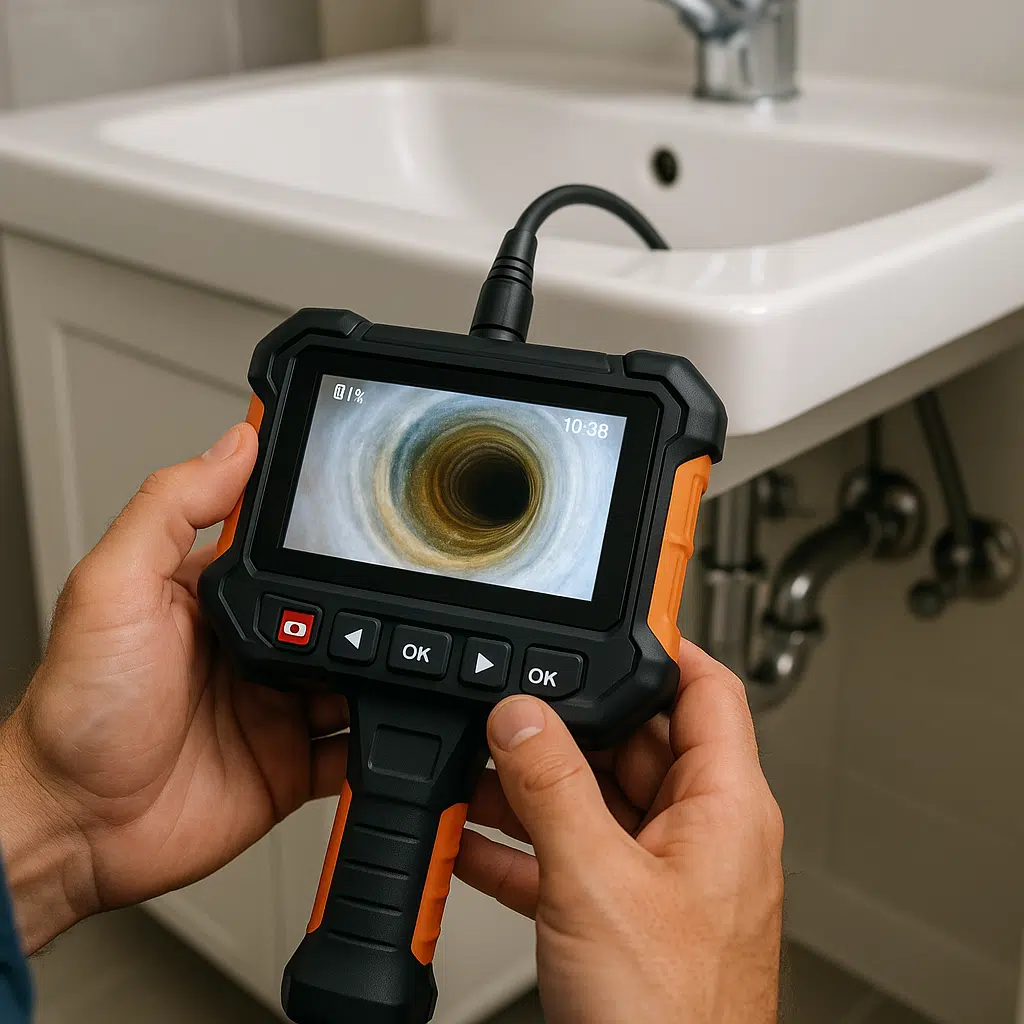
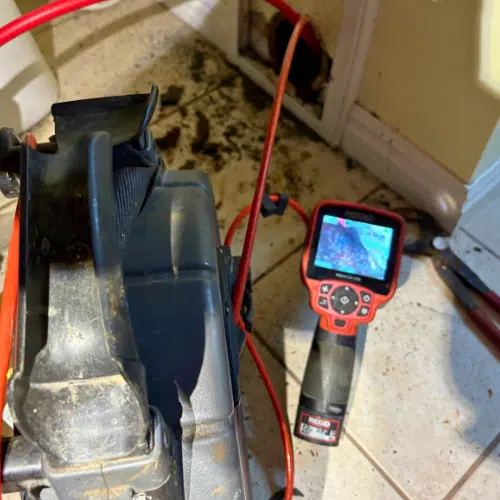
Identify the entry point, direction of travel, pipe materials, visible defects and where the camera reached. Surface locating connects a defect to its position beneath the yard or floor. Cleaning can reveal pipe hidden by roots, debris or standing water. Keep the recording with the repair location.
How deep is a sewer line?
Depth follows the house outlet, the receiving sewer and the fall needed between them. A basement connection can put the line well below the yard. Locating and measuring the actual route establishes excavation depth.
What makes one sewer quote cost more than another?
Compare the repair length, depth, pipe method, connections and surface work. Access beneath a driveway or basement floor adds different work from an open lawn. Utility crossings, sewer-use arrangements, inspections and restoration also affect the price.
Who handles our underground sewer referral?
See the current referral contact at the top of this guide for inspections, repair recommendations, scheduling and quotes.
Mountain Man field work / Drains & plumbing
Recent and Related Plumbing Work
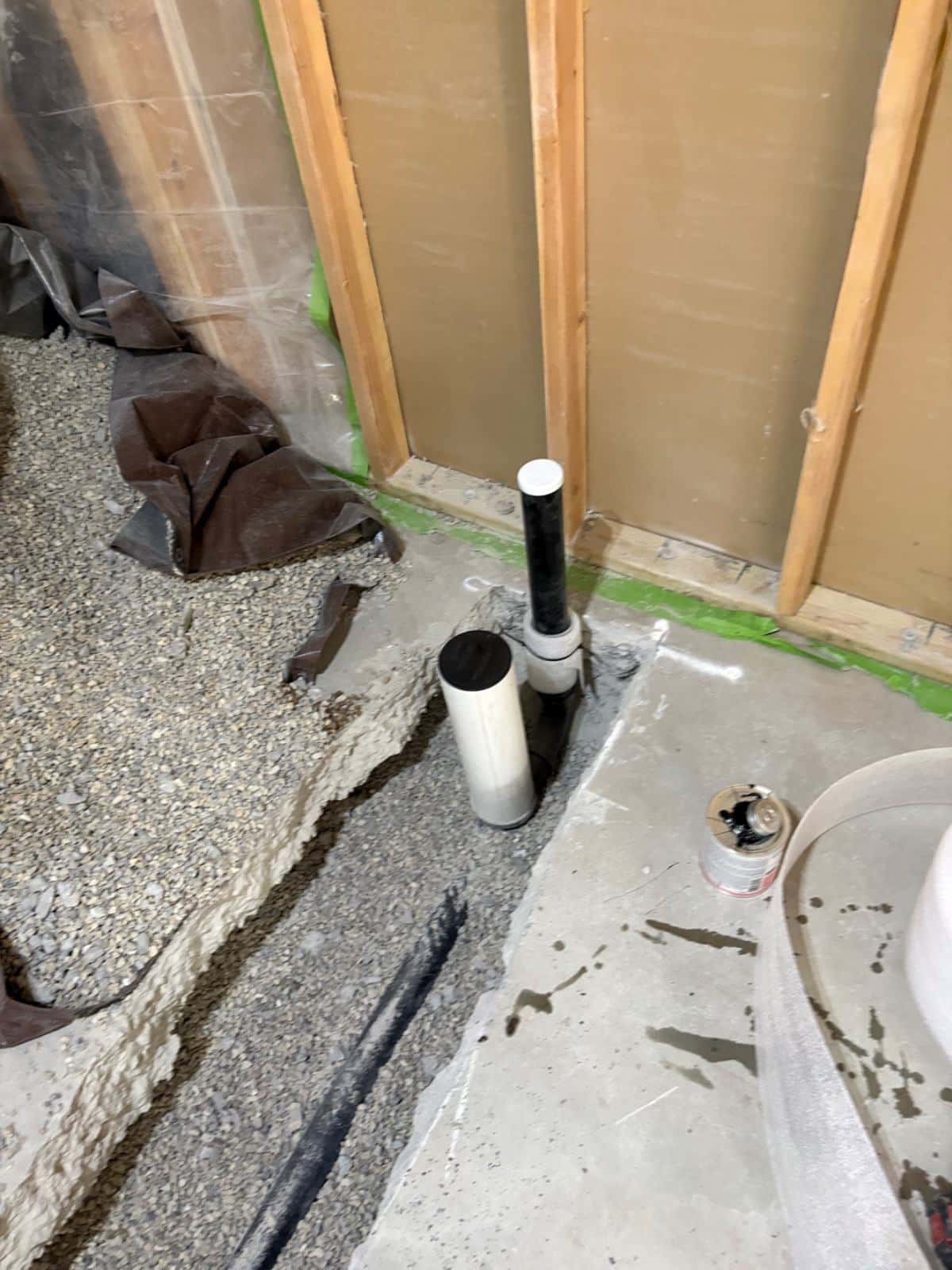
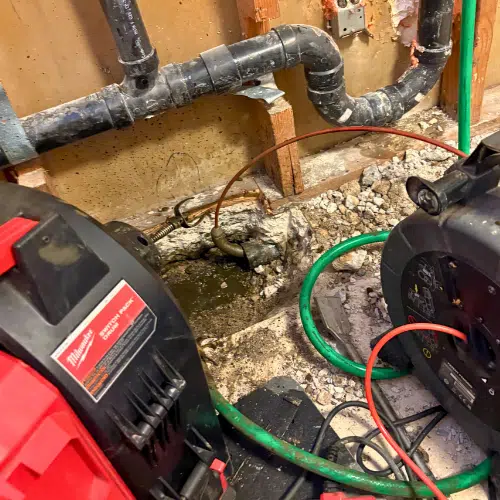
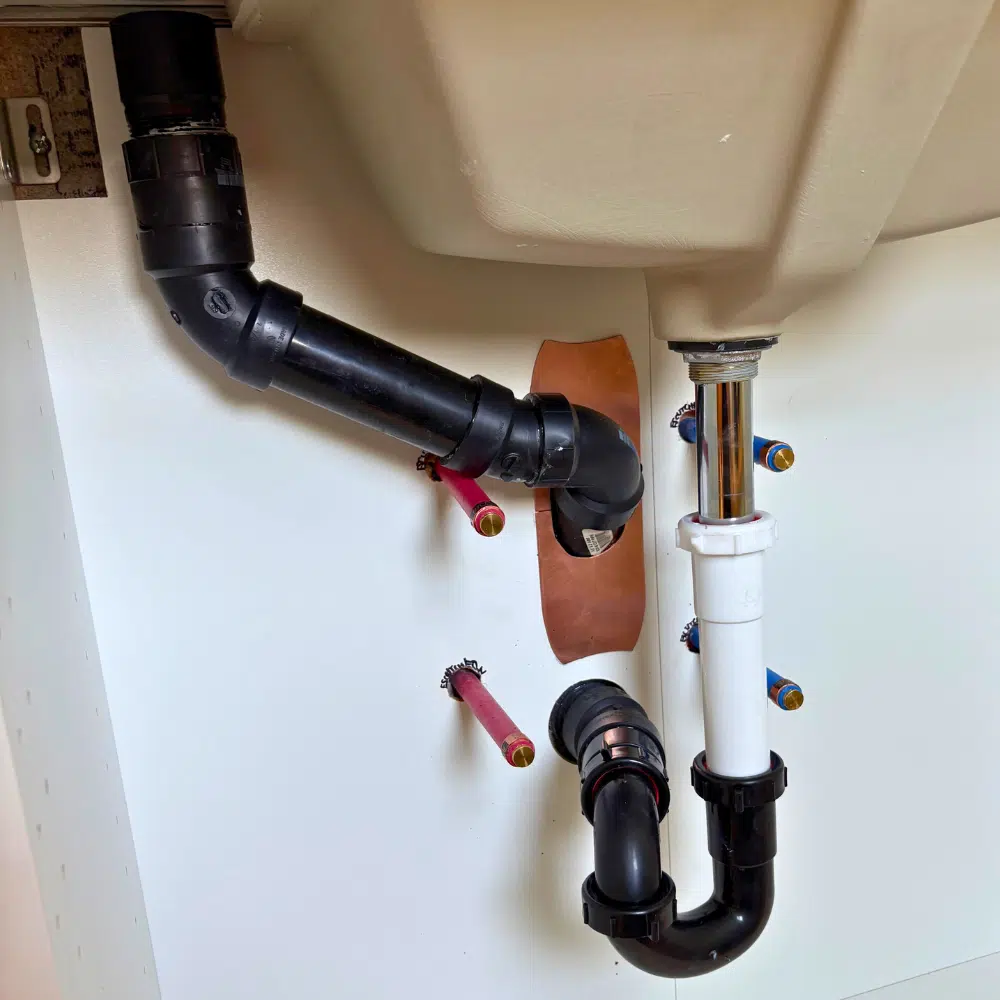
Sources & public guide record
Maintained by Mountain Man Plumbing. Updated September 10, 2026.
- Seattle Public Utilities · Sewer defects explained ↗
- Seattle Public Utilities · Sewer repair methods ↗
- EPA · How pipe bursting works ↗
- EPA · Sewer rehabilitation methods ↗
- Salt Lake City · Sewer system management and lateral rehabilitation ↗
- Salt Lake City · Customer sewer-lateral responsibility ↗
- Salt Lake City · Sewer lateral maps and permit records ↗
- Blue Stakes of Utah 811 · Planning an excavation ↗
- Charlotte Pipe · Plastic drainage systems ↗
- Seattle Public Utilities · Sewer backups ↗
- Vernal City · Orangeburg sewer laterals ↗
- National Clay Pipe Institute · Clay pipe and joints ↗
- Charlotte Pipe · Cast iron and underground drainage ↗
- Plastics Pipe Institute · Replacement pipe for bursting ↗
- RIDGID · Camera inspection and underground locating ↗
- Fernco · How a sewer tap saddle connects to a main ↗
- Fernco · Saddle connections and built-in pipe junctions ↗
- Perma-Liner · Liner preparation, inflation and curing ↗
- TRIC Tools · Bursting heads and replacement pipe ↗
Mountain Man’s underground referral
Get the line
looked at.
Tell Bumble Bee Plumbing which drains back up, how often it happens and what previous inspections found.
The price, in plain terms
What does the
price cover?
- Name the work.What's being repaired or installed, and what stays.
- Check what's included.Parts, labor, access, cleanup and any required permit.
- Settle the open questions.Extra work, exclusions and the warranty for this job.
A quote for sewer work should make the scope clear. Check who handles access and patching, whether any further diagnosis costs extra, and what happens if opening things up reveals more damage.
Comparing quotes? Start with the same work. Bring both descriptions of the work. Compare the equipment, repair scope and exclusions before deciding what the difference buys. A higher price alone doesn't prove a better job.
- What sewer line repairs cost in Utah What changes the cost and what to ask before agreeing. On Utah Plumbing Prices, which we publish.
- Already have a quote? Check it Use our second-opinion tool to work through the job and the price you've been given.
- How plumbing pricing works Flat rate, hourly, dispatch fees, permits: what each one means for what you pay.
From our local guides
The water history under our streets.
Follow the original mains, irrigation exchanges and pumping works through the local archives cited in each city guide.