Hard water comes in
Water + invisible rock minerals
Calcium and magnesium dissolved into the water as it moved through rock and soil. “Hard” describes the mineral load—not whether the water feels physically hard.
Northern Utah map + softener calculator
Tap near your home for an estimated hardness number, translate gpg and ppm into plain English, and compare water-softener sizes, regeneration timing, and salt use.
Real equipment. Real Utah homes.
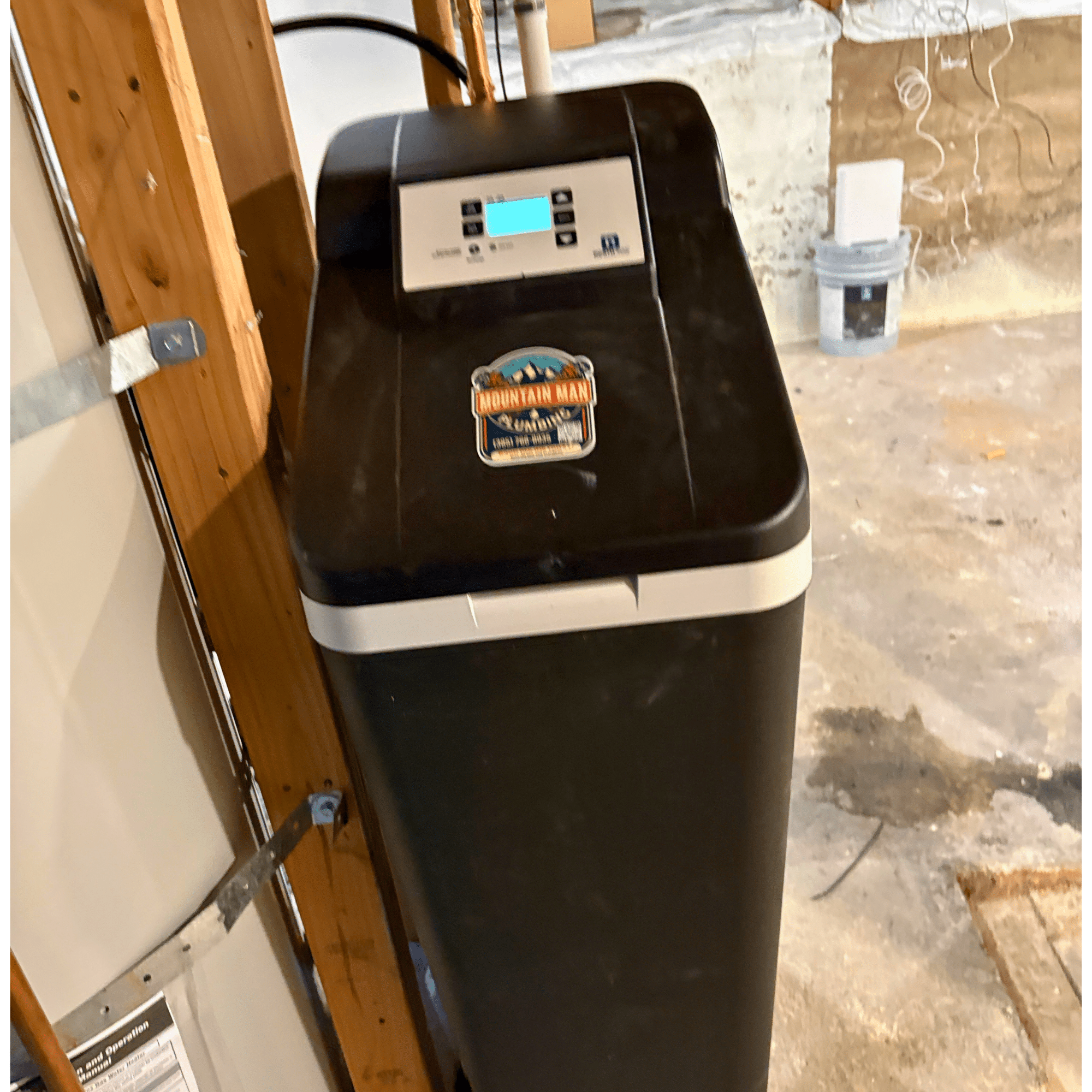
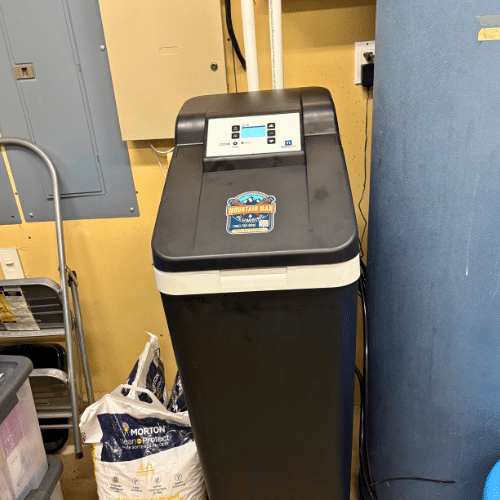
The right setup depends on available space, plumbing layout, drain access, and the equipment already in the home.

Water softening, from absolute zero
You cannot see the calcium and magnesium floating in the water. But when that water dries or gets hot, the water leaves and the minerals stay behind. That leftover mineral is the white crust on a faucet, the spots on a glass, and the scale inside a water heater.
Hard water comes in
Calcium and magnesium dissolved into the water as it moved through rock and soil. “Hard” describes the mineral load—not whether the water feels physically hard.
Soft water goes out
The softener does not make new water. It gives the same water a trip through a tank that catches calcium and magnesium before they reach the house.
Where you notice hardness
When hard water dries, the water disappears and the minerals stay as spots or a chalky crust.
Hardness minerals react with soap and make sticky soap scum. Soft water lets soap keep doing its job, so you usually need less.
Heat makes hardness minerals drop out faster. Scale can coat heating surfaces, collect in the tank, and make the heater work harder.
Scale can slowly narrow small openings in aerators, valves, showerheads, and equipment that uses hot water.
The part you actually feel
Hardness minerals grab onto soap and turn some of it into a stubborn film. That film can make skin feel tight, dry, itchy, or like the soap never completely rinsed away. Remove the hardness and the soap can do its job with less product and less residue left behind.
Soap and body wash lather more easily, so most households can use less.
There are fewer hardness minerals available to mix with soap and cling to the skin.
Soft water may feel slippery at first. That is usually your natural skin oils—not leftover soap—because there is less mineral film creating drag.
Most people notice it first in the shower: more lather, easier rinsing, and less of that tight, mineral-coated feeling after drying off.
Tap the map and we will translate the number into what you may notice around the house.
Think of the resin like thousands of tiny seats
Hover, tap, or use the keyboard on steps 1–4 to trace the water through the equipment.
GPG, capacity, regeneration, and salt—in plain English
Grains per gallon measures hardness. One gpg is about 17.1 parts per million.
A “48,000 grain” softener is describing mineral-catching capacity—not 48,000 gallons of water.
Regeneration happens when the usable capacity is nearly full. It is the reset cycle, not a repair.
Salt reloads the resin during regeneration. A unit that regenerates too often usually wastes salt and water.
What soft water changes—and what it does not
It removes calcium and magnesium before they can dry onto surfaces or cook onto heating elements.
With less mineral-and-soap film left behind, skin often feels cleaner and less tight after washing.
The goal is to stop feeding the buildup. Existing crust still needs cleaning and may loosen gradually.
A softener is for hardness. Chlorine taste, sediment, bacteria, and specific contaminants need the right test and the right separate treatment.
Northern Utah water-softener answers
Use the map for a public-data estimate, then verify the number at the tap. These are the questions homeowners around Salt Lake County and northern Utah usually need answered before choosing water treatment.
Tap your property on the map to estimate hardness in grains per gallon. The result can change across water-system boundaries, blended sources, seasons, and individual buildings, so an in-home test is the final check.
White crust, spotted glass, soap that will not rinse clean, and scale around fixtures are common hardness clues. A test tells you whether hardness is really the problem and how aggressive it is.
Size comes from hardness, household water use, and usable resin capacity. The calculator compares systems by days between regeneration—not by an oversized number on a sales sheet.
Salt use depends on hardness load, water use, programmed capacity, and efficiency. Enter your household details above to compare estimated bags per month before you buy.
A professional quote should cover the tap-water test, correct valve and drain setup, bypass, safe electrical connection, programming, startup, leak check, cleanup, and a homeowner walk-through.
Chlorine taste, odor, sediment, iron, and drinking-water concerns require their own tests. A softener treats calcium and magnesium; it is not a catch-all filter.
Hardness measures dissolved calcium and magnesium. The EPA does not set a legal limit for hardness because those minerals are generally not considered toxic. Hard water is mostly a scale, soap, fixture, and equipment problem—not a water-safety score.
Public water systems publish an annual Consumer Confidence Report. It identifies the water source, regulated contaminants that were detected, violations if any, and the system-wide test results. Use a certified tap-water test for a concern specific to your property.
Hardness is one water-quality question
Hardness measures dissolved calcium and magnesium. It is not a drinking-water safety score. Your water provider's annual Consumer Confidence Report covers regulated contaminants and system-wide results; a certified tap-water test answers property-specific concerns.
Start with a hardness test in grains per gallon. That number sizes and programs a softener.
That is a separate filtration question. Identify the source before choosing carbon, sediment, or another media.
Read the water provider's annual report, then use a certified laboratory when a concern needs a property-specific answer.
Public-water records do not describe a private source. Test the actual water before selecting any treatment equipment.